
“That's why I'm so sad 'cause you won't give me any jelly beans.”
Por qué es buena
Turning a demand for candy into heartbreak makes the plea playful instead of greedy.
Registro
Informal
Úsala tú
That's why I'm so mad 'cause you won't let me drive.
Capítulo 5 de 18 · 2'50"
The jelly beans turn into a confession. 'That's why I'm so sad 'cause you won't give me any jelly beans' is a joke, but the airport story that follows — a screaming four-year-old, all rage and no filter — isn't. 'That's my soul-mate,' one of them says, and the praise underneath is real.
❝ Monólogo · 9 frases Jelly Beans and the Screaming Boy
The Interrogator Calls About the Reunion
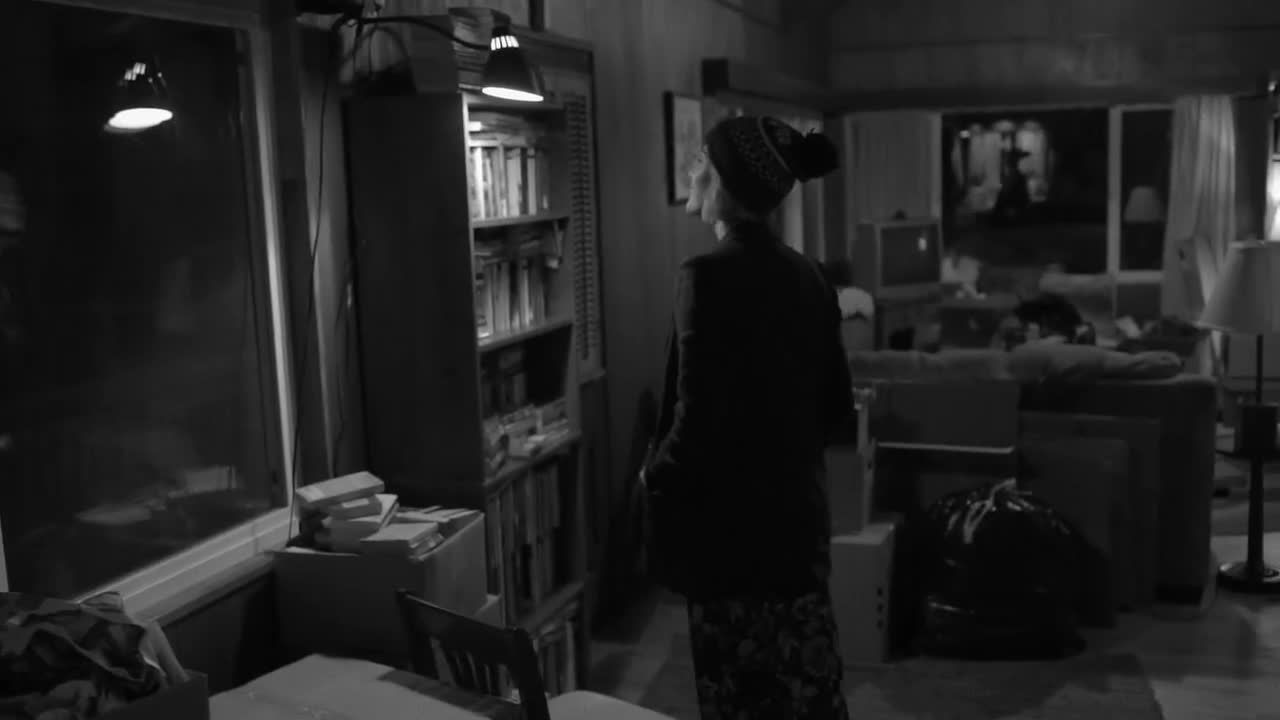
Back at the house, the two split a bag of jelly beans and catch up. One tells a story about a boy at the airport: furious, screaming, stomping, crying without embarrassment. Instead of pity, the reaction is envy — 'that's my soul-mate' — and the talk drifts to how impressive the other's life looks.
Under the candy and the jokes sits a comparison neither of them wants to name. The jelly beans are a small test of generosity — 'you won't give me any jelly beans' — played as a pout. Then comes the airport boy, so furious he can only scream and stomp, and the verdict is envy: 'And I just remember looking at him and being very jealous.' That envy is the scene's real subject. A child who cries in public has what the adults have trained themselves out of: 'I don't know some point we just learn it's better not to do that.' So when one of them says 'your life is really impressive,' it lands as a compliment and a wound at once — the other is successful, the speaker is the one who learned to hold it in. Even the phone call can't stay outside it: an old friend is mentioned, and 'she wants to know how you look' turns reunion into evidence.
A1–C2 es la escala MCER. Las tarjetas por encima del nivel elegido se atenúan y la reproducción no se pausa en ellas.
“That's why I'm so sad 'cause you won't give me any jelly beans.”
Turning a demand for candy into heartbreak makes the plea playful instead of greedy.
Informal
“And I just remember looking at him and being very jealous.”
Admitting envy of a screaming child says more about her than about the boy.
Neutral
“Me and that four year old. That's my soul-mate.”
Calling a toddler her soul-mate is a joke that quietly admits loneliness.
Informal
“I don't know some point we just learn it's better not to do that and...”
The vague 'some point' makes growing up sound like a slow, unplanned loss.
Neutral
“It's also little hard 'cause you're really impressive.”
Praising the other person is how she admits she feels out of her depth.
Neutral
“She wants to know how you look.”
Relaying her sister's nosy question word-for-word makes the awkwardness funny.
Informal
I was getting on the plane and there was this family and this little boy, he was so mad and just irate and of course he has no way of expressing any of that except sort of just like... Scream and stomp his feet and... I mean, he was screaming so loud that tongue was curing to the back of his mouth and tears were just like... You know, springing out of his face he was... Leaking you know. And I just remember looking at him and being very jealous. You know, that's my soul-mate.
 Siguiente · 06have a field dayLa escena: Jim and Amanda Find Romance Novels
It's a game between old friends: the pout about not getting any is affectionate teasing, and leaving the pink and purple ones shows they know each other's favorites.
It's a comparison. The boy can cry and scream freely, and the storyteller admits being jealous, because adults learn to hold those feelings in.
Because the child expresses exactly what the adult suppresses. 'Me and that four year old. That's my soul-mate' is half a joke and half a real wish for that freedom.
Someone from home — a child referred to as 'Miss Elissa' wants ice cream, and a woman nicknamed 'the interrogator' keeps asking who the old friend is.
Both compare where they ended up. One stayed local and works with their hands; the other's life looks bigger, which makes the reunion tender and awkward at once.