
“And I don't mean prayed for. I mean preyed upon.”
Por qué es buena
A near-homophone flips prayer into predation, and the accusation lands.
Registro
Formal
Úsala tú
I don't mean he helped me. I mean he hunted me.
Not supported; used.
Capítulo 6 de 21 · 4'25"
Phil Saviano becomes the first survivor to sit down with the team. He draws the line between being "prayed for" and "preyed upon," and sums up the damage: when a priest does this, "he robs you of your faith." The abuse, he insists, is bigger than Boston.
❝ Monólogo · 17 frases Why We Call Ourselves Survivors
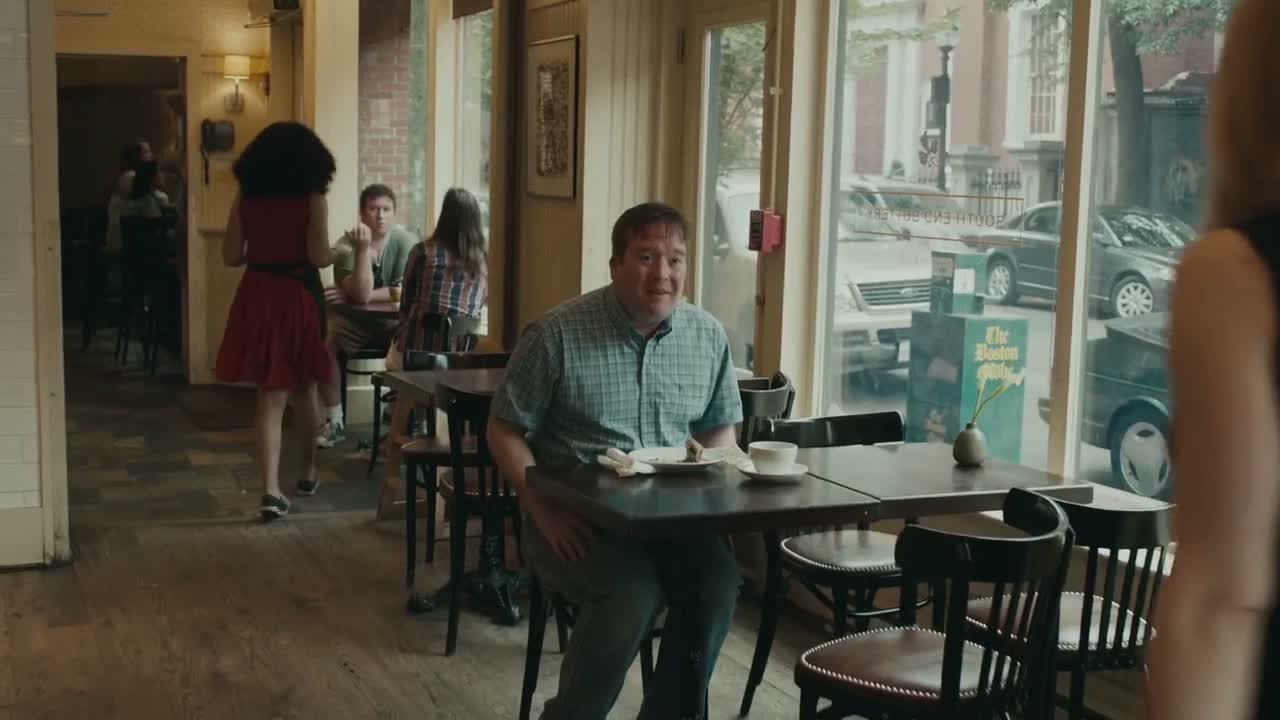
Phil Saviano visits the Boston Globe and asks to see Sacha Pfeiffer. He is the first survivor the Spotlight team has met, and he tells them how a priest in Worcester preyed on him as a boy, how religion counted for a lot in a poor family, and how he was groomed until he went along. He calls it spiritual abuse as well as physical.
The scene works because Saviano refuses to let the story be simplified. He corrects the record twice - not "prayed for" but "preyed upon" - and insists the issue is not homosexuality but power: "priests using the collar to rape kids." From there he walks the team through the mechanics of grooming, step by step, showing how each small compliance makes the next one possible. His explanation of why victims stay quiet is the heart of it: "How do you say no to God, right?" Then he names the cost as spiritual as much as physical - "he robs you of your faith" - and traces where that can lead, from the bottle to the bridge. The final line, "That's why we call ourselves survivors," reframes the whole interview: this is not a story about helplessness but about having come through.
A1–C2 es la escala MCER. Las tarjetas por encima del nivel elegido se atenúan y la reproducción no se pausa en ellas.
“And I don't mean prayed for. I mean preyed upon.”
A near-homophone flips prayer into predation, and the accusation lands.
Formal
“How do you say no to God, right?”
A single question captures the trap: to refuse the priest felt like refusing God.
Neutral
“That's why we call ourselves survivors.”
A word choice that turns victims into survivors: naming as an act of strength.
Neutral
“This is not just Boston. It's the whole country. It's the whole world.”
Escalating scope in three beats: not one city, but a country, a world.
Formal
“And it goes right up to the Vatican.”
One line raises the ceiling of accountability all the way to the top.
Formal
When you're a poor kid from a poor family, religion counts for a lot. And when a priest pays attention to you, it's a big deal. He asks you to collect the hymnals or take out the trash, you feel special. It's like God asking for help. So maybe it's a little weird when he tells you a dirty joke, but now you got a secret together, so you go along. Then he shows you a porno mag, and you go along. And you go along, and you go along, until one day he asks you to jerk him off or give him a blow job. And so you go along with that, too, because you feel trapped, because he has groomed you. How do you say no to God, right? See, it is important to understand that this is not just physical abuse, it's spiritual abuse, too. And when a priest does this to you, he robs you of your faith. So you reach for the bottle or the needle. Or if those don't work, you jump off a bridge. That's why we call ourselves survivors.
 Siguiente · 07the beginning of it allLa escena: Reporters Interview Abuse Survivors
He is correcting the wordplay himself: the priest did not offer him prayer but hunted him as a victim.
Beyond the physical acts, he says a priest who does this robs a child of faith, which drives some survivors to drink, drugs, or worse.
He says the abuse is nationwide and worldwide and reaches up to the Vatican, though he admits he has no proof yet.
As Phil explains it, it is where the Church sends priests after they are caught, rather than turning them over to the police.