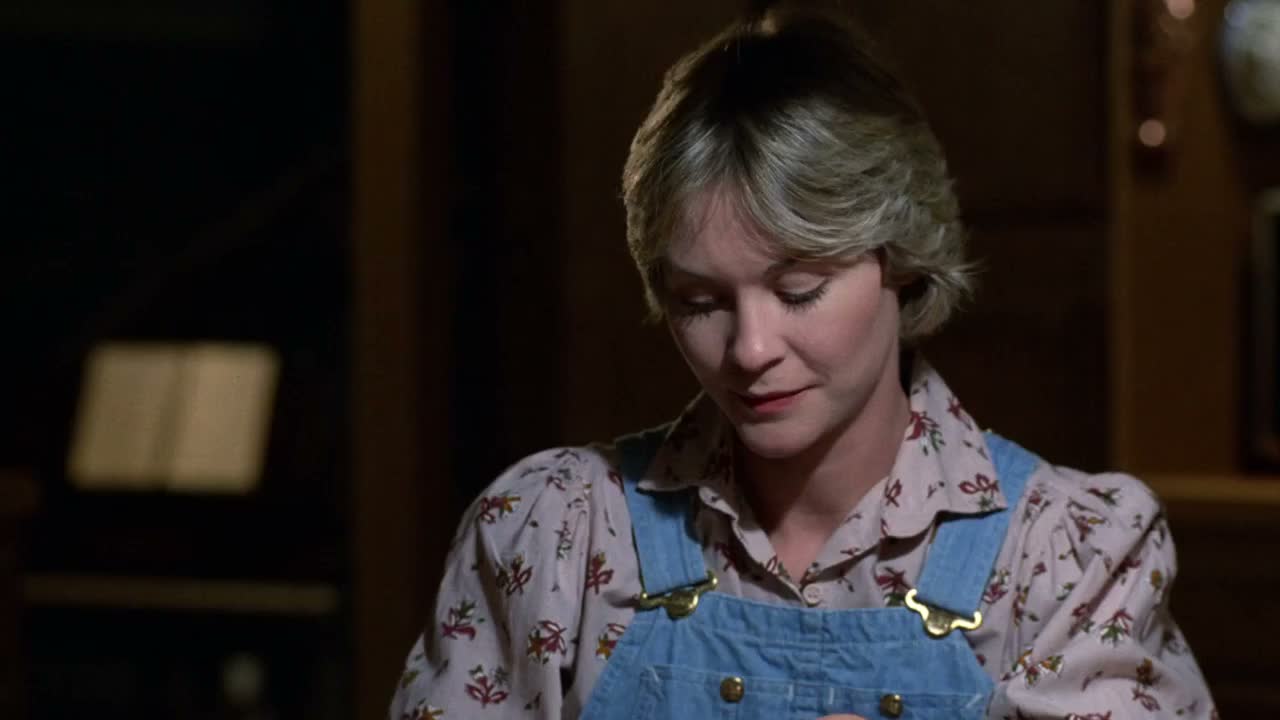
“And I just stood there in the kitchen, outraged that my father was not a man.”
A child turns his father's tears into a verdict on manhood, and means every word.
literary
Capítulo 5 de 10 · 3'25"
A son watches his father cry in the kitchen and shouts him down until the family pushes him out. The parents are splitting up, and nobody will say why. What follows is not a fight. "We never had angry words, but it was an estrangement that I created," and that silence lasts fifteen years.
❝ Monólogo · 5 frases Dad Breaks Down in the Kitchen
Dad Takes the Blame
❝ Monólogo · 9 frases The Estrangement He Created
In a kitchen he sees his father break down and cry for the first time. He screams "crybaby" until they push him out. His mother cries at the piano until she cannot see the notes and announces the parents are splitting up. He never says he is angry. The estrangement he says he created lasts fifteen years.
He had never seen his father cry. When his dad "broke down" in the kitchen, he stood there "outraged that my father was not a man" and saw him "crying like a little boy." He "started screaming \"crybaby\" at him as loud as I could" until they pushed him out. He also did not know why his parents were "splitting up," and he "didn't want to know." The father says he would never tell the kids she divorced him. "Instead, I let them think I divorced her," "Protecting her 'cause she's fragile," because "I figured I could be hurt less than she," and "I still loved her." Years later the son says, "We never had angry words, but it was an estrangement that I created, not from my dad." His father "was seeking a relationship." He "went off and got lost in my work," "became a workaholic," and "lost the contact." "It went on for... 15 years."
A1–C2 es la escala MCER. Las tarjetas por encima del nivel elegido se atenúan y la reproducción no se pausa en ellas.
“And I just stood there in the kitchen, outraged that my father was not a man.”
A child turns his father's tears into a verdict on manhood, and means every word.
literary
“I look back, I think, "How dare I do that?"”
The question points backward and pins the speaker's selfishness in place.
Informal
“Instead, I let them think I divorced her.”
One instead swaps the truth for the story the children were allowed to believe.
Neutral
“And so, I figured I could be hurt less than she.”
Love shows up as a calculation about who can carry more pain.
Neutral
“We never had angry words, but it was an estrangement that I created, not from my dad.”
He denies the fight, then lifts the silence off his father and sets it on himself.
literary
“I became my father. I became a workaholic.”
The second sentence turns becoming his father into work that swallows a life.
Neutral
Spielberg: And one day, my dad just broke down, and I never had seen my dad cry before. And I just stood there in the kitchen, outraged that my father was not a man. He was crying like a little boy. And I started screaming "crybaby" at him as loud as I could. Just started screaming, "Crybaby, you crybaby, you crybaby," until they pushed me out of the kitchen.
Spielberg: It was literally the worst period of my entire life. I never told my dad I was mad at him. We never had angry words, but it was an estrangement that I created, not from my dad. He was seeking a relationship with me. I just went off and got lost in my work, the way I saw my dad get lost in his all those years of coming home late and working weekends back in Phoenix and all of that. I became my father. I became a workaholic. And I just lost the contact with him. It went on for... 15 years.
Siguiente · 06work yourself upLa escena: Spielberg Directs the E.T. KidsHe says he had never seen his dad cry. He stood in the kitchen, "outraged that my father was not a man," because his father was "crying like a little boy." He "started screaming 'crybaby' at him as loud as I could," and he kept shouting "Crybaby, you crybaby, you crybaby," until they pushed him out of the kitchen.
He says he would never tell the kids that she divorced him. "Instead, I let them think I divorced her." The reason he gives is "Protecting her 'cause she's fragile," and "I figured I could be hurt less than she." He adds, "I still loved her."
He says, "We never had angry words, but it was an estrangement that I created, not from my dad." His father "was seeking a relationship," while he "went off and got lost in my work" and "lost the contact." "It went on for... 15 years."
No. He says, "I never told my dad I was mad at him." He also says they "never had angry words." The distance was an estrangement he created, while his father was seeking a relationship with him.