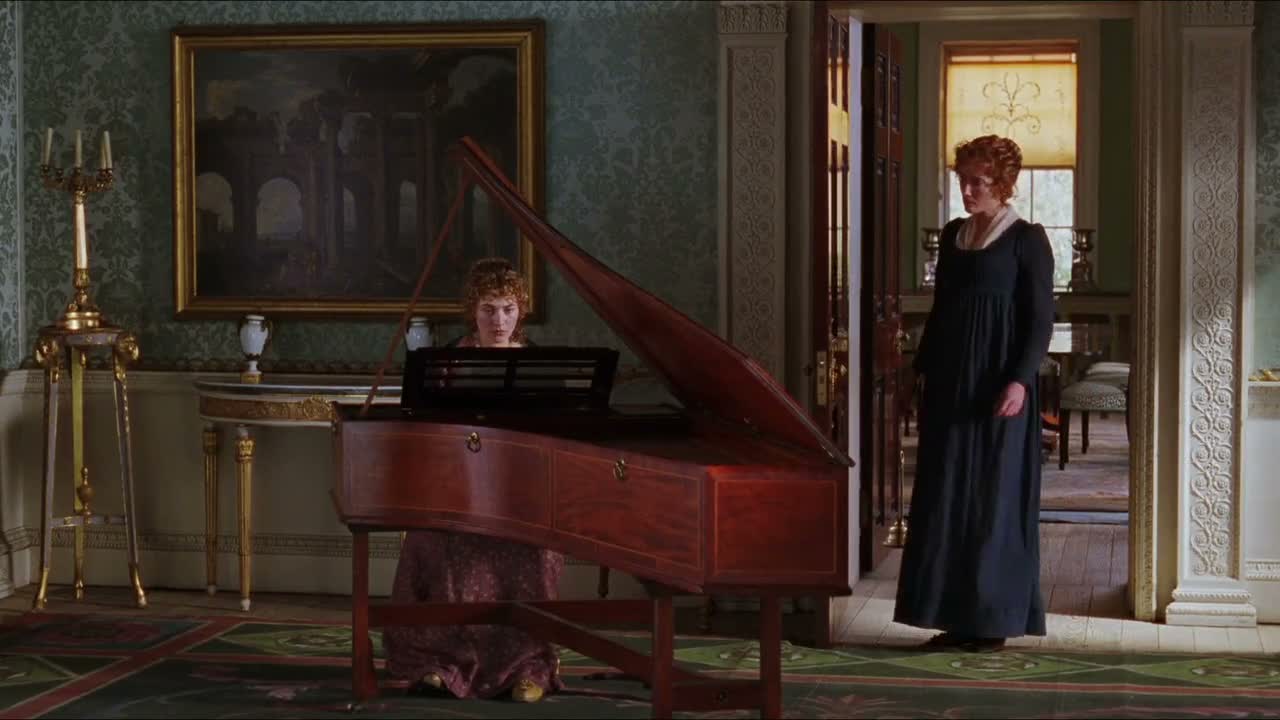
“One had rather on such occasions do too much than too little.”
It turns social obligation into a rule of thumb: overshoot rather than shortchange.
Formal
Capítulo 1 de 27 · 2'54"
On his deathbed, Mr. Dashwood makes John promise to provide for his stepmother and half-sisters. No sooner is the promise made than John and his wife Fanny begin bargaining it down, from three thousand pounds to a hundred a year to a few pounds now and then — until Fanny asks what four women could possibly want 'more than that.'
The Promise Gets Bargained Down
Fanny Says the Sisters Need Nothing
At the deathbed of Mr. Dashwood, his son John learns that Norland passes to him alone while his stepmother and half-sisters are left with barely enough to live on. The old man makes John promise to help them, and John agrees. Later, John and his wife Fanny discuss how much to give, and the sum steadily shrinks.
The scene is about how quickly a promise made to the dying is renegotiated. John agrees without hesitation; his father asks, 'You must promise to do this,' and John replies, 'I promise, Father.' Then Fanny takes over. She never argues that the family deserves nothing — she argues that they do not need much, and each step sounds reasonable: an annuity may leave them paying too long, 'People always live forever when there is an annuity to be paid them,' so a smaller gift will do. The moral language stays intact while the amount collapses. Fanny's closing case, 'What on earth could four women want for more than that?', shows the trick: comfort is redefined as enough, and a promise becomes a bill John is happy to reduce. The scene sets the family's coldness in motion before the sisters ever appear.
A1–C2 es la escala MCER. Las tarjetas por encima del nivel elegido se atenúan y la reproducción no se pausa en ellas.
“One had rather on such occasions do too much than too little.”
It turns social obligation into a rule of thumb: overshoot rather than shortchange.
Formal
“What brother on earth would do half so much for his real sisters?”
A rhetorical question that flatters as it pressures, dressing a demand as common decency.
Neutral
“People always live forever when there is an annuity to be paid them.”
A dry joke about how anyone on an annuity seems to live forever, exposing the cost behind kindness.
Neutral
“What on earth could four women want for more than that?”
The casual scorn of on earth dismisses four women's needs in a single breath.
Informal
“Their housekeeping will be nothing: no carriage, no horses, hardly any servants, and they'll keep no company.”
A list of things they supposedly lack turns a family's grief into a tidy budget justification.
Informal
“They will be much more able to give you something.”
It quietly reverses charity into profit, revealing exactly how this household thinks.
Neutral
Sense and Sensibility: tu progreso
Capítulo 1 de 27 · quedan unos 86 min
Siguiente · 02not to be borneLa escena: The Dashwoods Lose NorlandHe asks John to help his stepmother and half-sisters, who are left with only five hundred pounds a year and no dowries. John promises without hesitation.
Three thousand pounds, with the interest providing the sisters a little extra income. Fanny immediately begins arguing the sum down.
She jokes that people receiving an annuity live forever, so John might end up paying for far longer than fifteen years. She prefers giving the smallest amount possible.
Nothing more than what they have. She says their housekeeping will be nothing, with no carriage, horses, or company, and that they will even be able to give John something.
It intensifies the question, turning it into an incredulous 'what in the world could they want more than that?' rather than a neutral request for information.