
“I’m only your favorite woman of all time.”
Por qué es buena
Self-love stated as recorded history: favorite woman, all time, no debate.
Registro
Informal
Úsala tú
You're only my favorite chef of all time.
Capítulo 11 de 26 · 3'01"
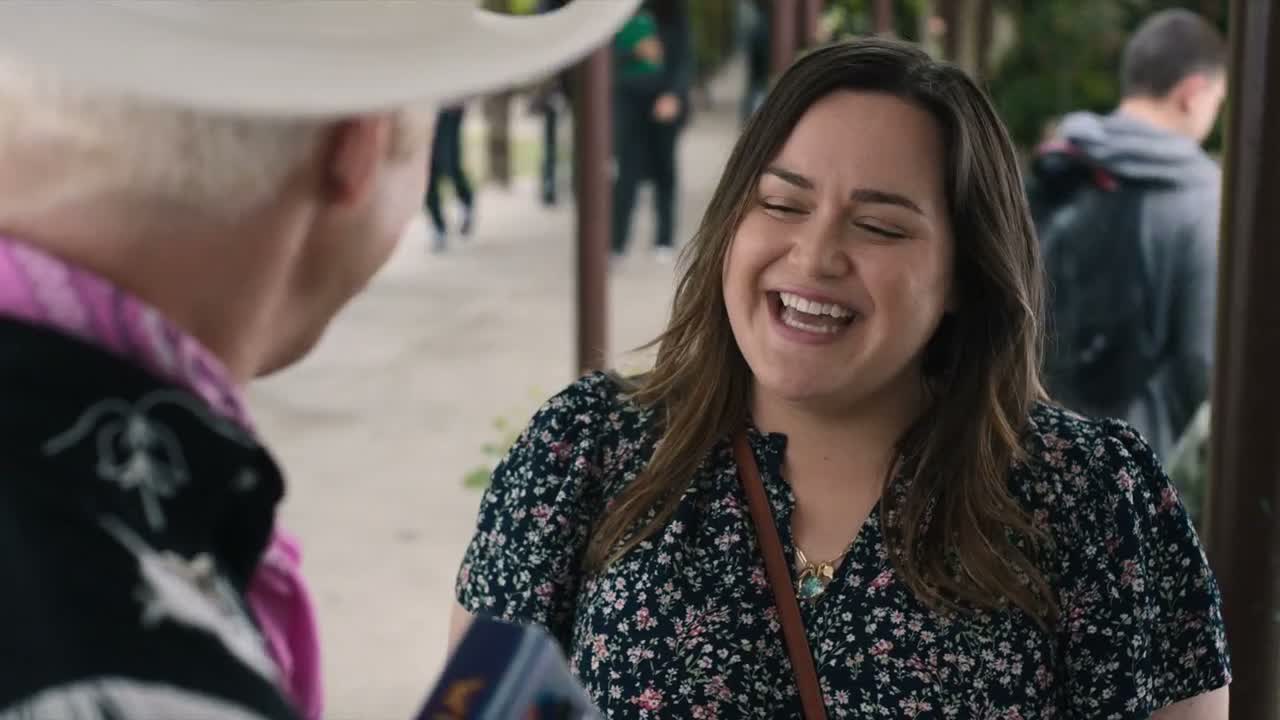
Barbie introduces herself to a group of teenage girls as their favorite woman of all time, and they take her apart. "You’ve been making women feel bad about themselves since you were invented," one says, calling her a symbol of sexualized capitalism and unrealistic ideals. The homecoming turns into a roasting.
The Girls Take Barbie Apart
Barbie finds Sasha and her friends in the real world and greets them as the woman they have loved all their lives. The teenagers are not impressed: they say they stopped playing with Barbie at five, and Sasha delivers a speech accusing her of harming girls' self-worth and representing everything wrong with the culture.
The scene is the film's own critique arriving in person. Barbie expects gratitude — "I’m only your favorite woman of all time." — and instead gets a list of charges: "You destroy girls’ innate sense of worth and you are killing the planet with your glorification of rampant consumerism." Sasha does not soften it, and even calls her a fascist, which stings precisely because Barbie has no defense ready. What makes the exchange work is that Barbie is not a villain but an idea that has outlived its praise, and she genuinely believed she was helping. When she protests that she was only meant to help women, the reply is flat and final: "Oh, I am powerful." The film lets the girls be right without making them kind.
A1–C2 es la escala MCER. Las tarjetas por encima del nivel elegido se atenúan y la reproducción no se pausa en ellas.
“I’m only your favorite woman of all time.”
Self-love stated as recorded history: favorite woman, all time, no debate.
Informal
“You’ve been making women feel bad about themselves since you were invented.”
A personal feeling traced back to an origin story: blame since the day you were invented.
Neutral
“I think you have that the wrong way around.”
Not a denial, a reversal: you've got the direction backwards.
Informal
“You represent everything wrong with our culture.”
A person reframed as a symptom: everything wrong, folded into one figure.
Neutral
“You destroy girls’ innate sense of worth and you are killing the planet with your glorification of rampant consumerism.”
Two charges in one breath: a girl's self-worth and the whole planet.
Formal
“And until you showed up here and declared yourself Barbie, I hadn’t thought about you in years, you fascist!”
Indifference followed by an insult: the sharpest line is the afterthought.
Informal
 Siguiente · 12seek my fortuneLa escena: Ken Tries to Bring Patriarchy Home
They see Barbie as a symbol of outdated beauty standards and consumerism. For them she is not a beloved toy but an idea that damaged girls, so they confront her rather than thank her.
It means a choice you only make when nothing else is available. A girl says she would play with Barbie only as a last resort, which punctures Barbie's belief that she was loved.
She is polite and a little stunned. She tries to correct them and insists she only meant to help women, but she has no real answer and soon excuses herself.
It's an extreme insult meant to sting, and it lands because Barbie has no defense ready. It shows how completely the girls feel they have outgrown the doll.
Not here. The exchange stays hostile from start to finish, and Barbie ends it by excusing herself rather than winning any of them over.