“There always was conflict. You never knew what was going to happen.”
Two short sentences stack the dread of a home where anything could blow up next.
Neutral
Capítulo 9 de 19 · 4'52"
On paper this is a scene about money: a lottery ticket, a fistful of debts, a relative who won't lend another dime. But the same breath carries the family history behind it—"There always was conflict. You never knew what was going to happen."—and the drinking that fills the empty hours.
❝ Monólogo · 4 frases Mark Recites His Debts
❝ Monólogo · 11 frases The Vodka That Made Him Happy
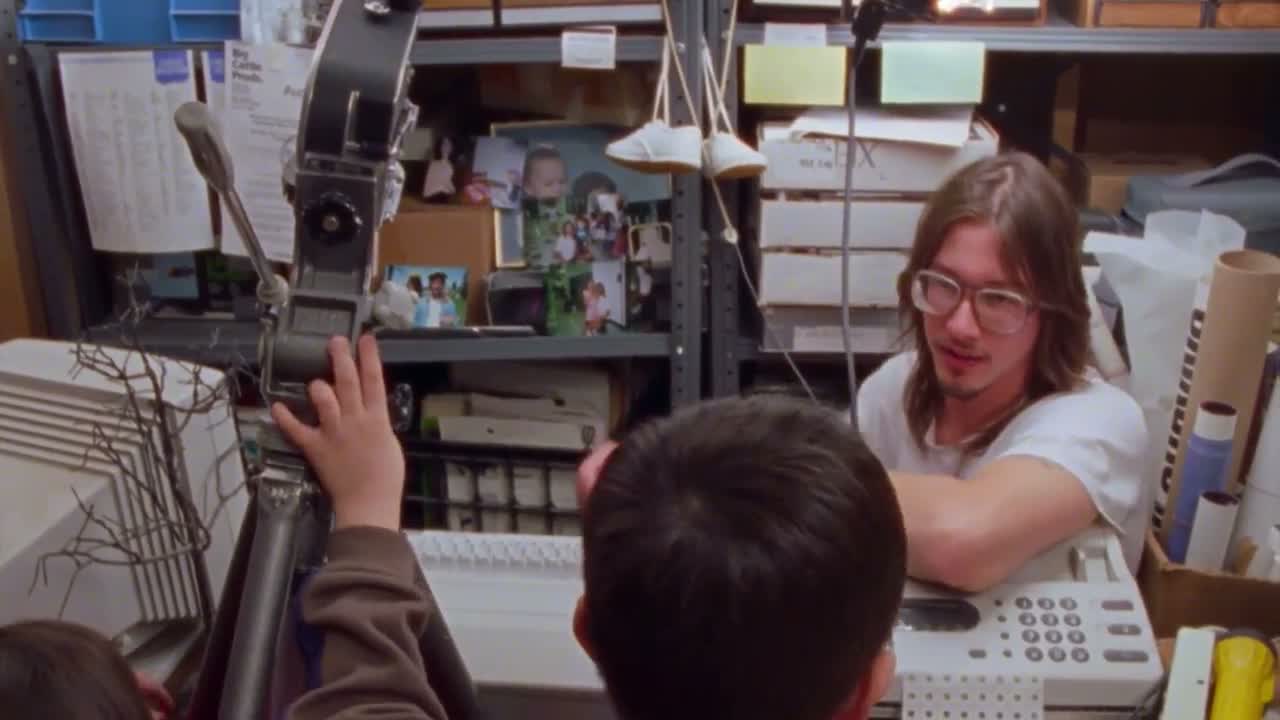
Mark narrates his debts and his family in the same flat voice: a childhood of conflict, a father who withdrew, a mother he describes as a Swedish girl. He runs a scratch-off, wins two dollars, talks about the lottery versus drugs, then sits with the camera and recites what he owes.
The scene keeps sliding between two kinds of failure: the family Mark grew up in and the money he cannot hold on to. He speaks about his parents without self-pity—"My mother and my father, they just don't mix very well"—then totals up what he owes with a gambler's calm. The lottery is where the two halves meet: a two-dollar win, a lecture that it beats drugs and alcohol, a sponsor with his own problem. Money here is not just cash; it is a measure of how far he has drifted from the life he was promised. Even the offer of more funding comes with conditions he cannot meet.
A1–C2 es la escala MCER. Las tarjetas por encima del nivel elegido se atenúan y la reproducción no se pausa en ellas.
“There always was conflict. You never knew what was going to happen.”
Two short sentences stack the dread of a home where anything could blow up next.
Neutral
“My mother and my father, they just don't mix very well.”
It names both parents, then settles their whole marriage with the quiet phrase don't mix.
Neutral
“I'd go over there all the time, and we'd buy a fifth of vodka and share it.”
The paired woulds turn a small drinking ritual into a warm, lonely memory of company.
Informal
“I've been losing about ten bucks a day for the last week.”
Turning a losing week into a daily figure shows exactly how gambling bleeds a person dry.
Neutral
One day I was partying in my basement... and I always used to get pissed off inside... because I would want to party really heavy... and no one else would, you know. Then, all of a sudden, Mark came over... and either I had a bottle of vodka, or he had a bottle of vodka. But anyway, we were drinking vodka, and I was so happy... that I found someone who would drink vodka with me, you know? So, then Mark would drink vodka with me all the time. I'd go over there all the time, and we'd buy a fifth of vodka and share it. And that really made me happy.
Here's what I think of the lottery: I think when you play the lottery... sometimes you win and sometimes you lose. But it's better than using drugs or alcohol... because when you use drugs or alcohol-- especially drugs--you always lose.
Siguiente · 10have your cake and eat it tooLa escena: Mark Fears Losing His KidsAbout $10,000 to his dad, $3,600 in child support, $1,500 to the IRS, plus cards, phone and state tax. He lists it all calmly, like a shopping list of his life.
He says playing is better than drugs or alcohol, because with the lottery you sometimes win, while with addiction you always lose. It's a gambler's logic, but also a survival argument.
He says he can't finance a film he isn't fully in sympathy with. He wants Mark to cut the rough language and get off the bottle first, so the refusal is about conditions, not just cash.
A fifth is a standard bottle size, about 750ml, so it just means a full bottle. Here it marks the ritual Mark and a friend share when they drink together.