00:00 / 02:39
00:00 / 02:39

Lester and Carolyn's Couch Fight, Explained

American Beauty · 1999

Capítulo 11 de 14 · 2'39"

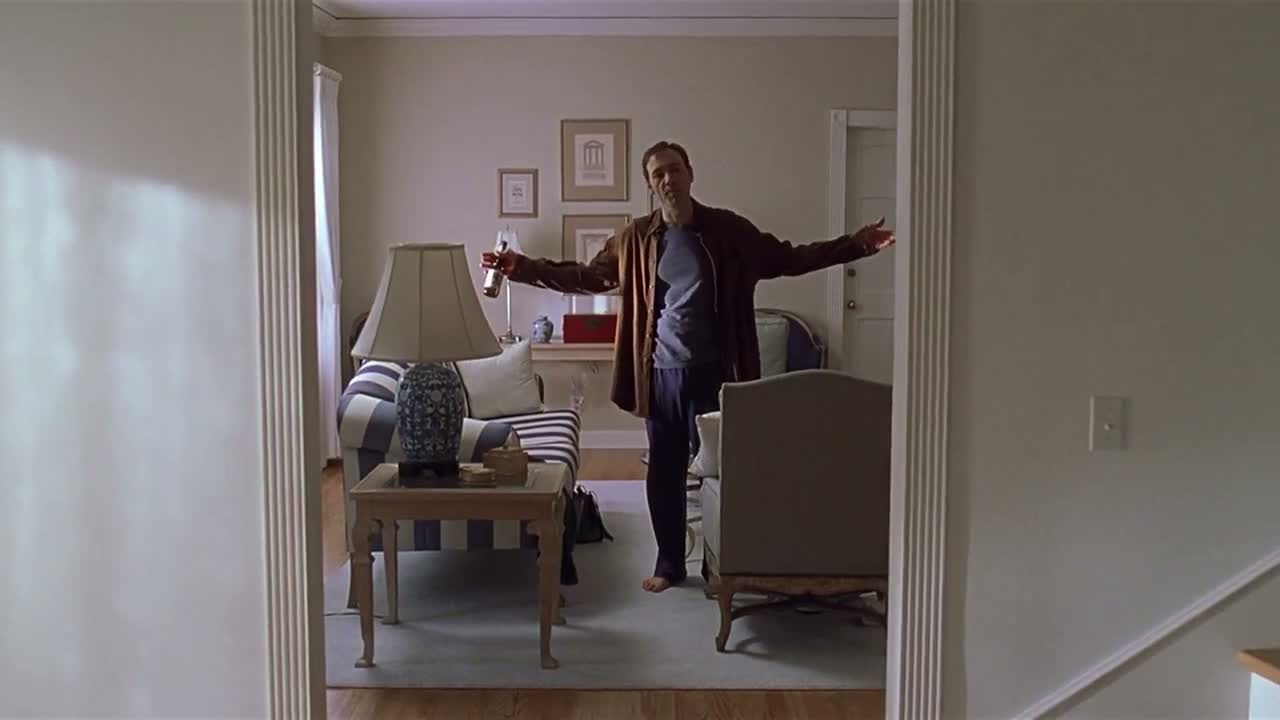
Someone spots a strange car out front and hears the Camry was traded in. A household complaint slides into the couch, the beer, and a charge that things now matter more than living. Underneath sits one question: "Whatever happened to that girl..."

Marriage troubleArgumentsConfrontingComplainingSpousesB1slowamericanClean

Key moments

Start here, then watch the full scene
  1. ❝ Monólogo · 5 frases What happened to that girl

    0:57–1:51
    54s
  2. The couch is not the point

    2:04–2:38
    34s
  1. ❝ MonólogoWhere did that girl go5 frasesPracticar ↗

Lester and Carolyn's Couch Fight, explained

What happens

At home, someone notices a car out front and asks where the Camry went. It was traded in, with no consultation. Talk of Jane and an empty house turns into a memory of a wilder girl, then a fight when beer nearly hits the couch. One side says it is just a couch and just stuff; the other says the couch is not just a couch.

What's really going on

Trading the car without asking is a reach for freedom, and "You never drove it" tries to make that reach sound fair. The next lines look like warmth — "You look great," Jane not home, "the whole house to ourselves" — until "When did you become so joyless?" The joyless charge is really about someone else: the girl who faked seizures and flashed the traffic helicopters. "Have you totally forgotten about her? Because I haven't" keeps that girl in the room. The couch repeats the split in objects. "Lester, you're gonna spill beer on the couch" guards the thing. "So what? It's just a couch" refuses the guard. "This is not just a couch" says the refusal is the wound. "This is just stuff. And it's become more important to you than living" answers that the stuff has taken the place of living. The scene does not pick a winner. A car and a sofa are simply what this marriage can bear to fight about.

Key lines & what they mean

“There happens to be a lot about me that you don't know, Mr. Smarty Man.”
A snapped defense: the speaker refuses the charge of being joyless and warns the other not to act as if they already know the whole person.
“Have you totally forgotten about her?”
Asked of the wilder girl just described, this is less a memory test than a claim that one of them still lives with her and the other has buried her.
“And it's become more important to you than living. Honey, that's just nuts.”
The couch, the car, the careful house: the speaker says those things now outrank actually living, and calls that priority absurd.
“This is not just a couch!”
A refusal of "It's just a couch." The object is being asked to stand for taste, money, and the life built around keeping it perfect.

Theme

  • Marriage — A traded car and a defended couch show two spouses who no longer agree on what a life is for.
  • Memory — Whatever happened to that girl keeps a younger spouse in the room as the standard the present keeps failing.

Qué aprendes en este capítulo

Puntos de enseñanza

Repasa justo después de ver
Mi nivel4/6

A1–C2 es la escala MCER. Las tarjetas por encima del nivel elegido se atenúan y la reproducción no se pausa en ellas.

American Beauty: tu progreso

Capítulo 11 de 14 · quedan unos 9 min

← Anterior
Siguiente · 12put him out of his miseryLa escena: Ricky and Jane Share Their Secrets

Ideas clave

Lo que te llevas
  1. I traded it in says the decision is already final.
  2. Whatever happened to her is nostalgia aimed like an accusation.
  3. It's just a couch cuts Carolyn's status down to furniture.
  4. So what refuses the argument instead of answering it.

Preguntas frecuentes

La pregunta, luego la frase
Why is the Camry traded in without a consultation?

The defense is already in the exchange: "You never drove it." The car is treated as unused, so asking first is brushed off. The missing question is the point — a decision made alone, inside a marriage.

Who is the girl in "Whatever happened to that girl"?

She is the younger version of the person just called joyless. The details are theirs together: faking seizures at frat parties, and running to the roof of "our first apartment" to flash the traffic helicopters. "Because I haven't" keeps her as the standard the present is failing.

Why does a beer spill become a fight about life?

"Lester, you're gonna spill beer on the couch" protects an object. "So what? It's just a couch" demotes it. "This is not just a couch" promotes it again, and "This isn't life. This is just stuff" says the house has replaced living. The spill is only the spark.

Is either of them right about the couch?

The lines let both stand. One side answers "joyless" with "There happens to be a lot about me that you don't know." The other hears a sofa defended as if it were a life and calls that "just nuts." The scene records the standoff and does not award the point.