
“We have the same title, yet are never described the same way.”
Por qué es buena
Inequality stated as a calm observation.
Registro
Formal
Úsala tú
We hold the same role, yet are never judged the same way.
Capítulo 4 de 24 · 3'38"
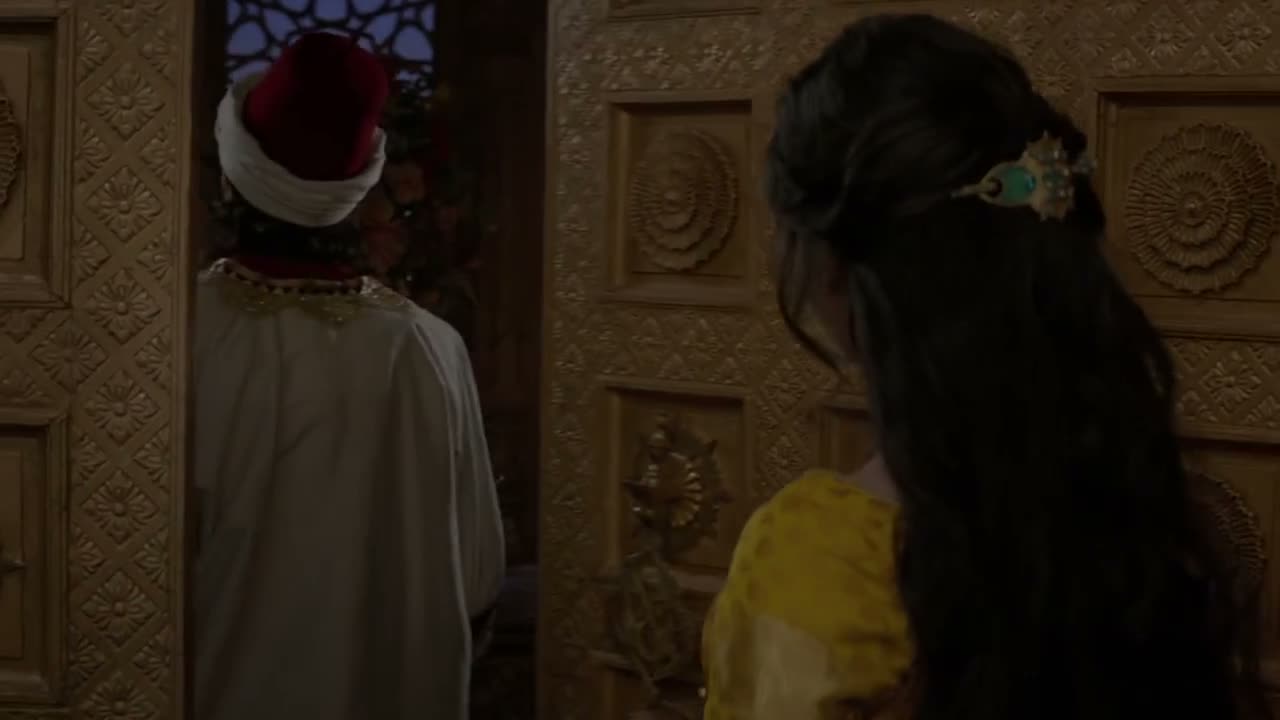
On the surface it's a royal audience: a suitor is rejected, then the court argues about war and succession. Underneath, Jafar is steering. "Remember your place," he is told, and he apologises at once, yet he still gets the Sultan to declare that invading Shirabad is the right thing to do.
Jafar Oversteps and Is Put in His Place
At the palace in Agrabah, Prince Anders asks for Jasmine's hand and is turned down flat. Jafar pushes for war with Shirabad, is sharply rebuked with "Remember your place," then recovers and bends the Sultan toward his view. The Sultan refuses Jasmine the throne, saying it has never been done, and Jafar supplies the argument that books are not experience.
Everyone is playing for position. The suitor is dismissed because Jasmine won't be traded like a treaty, but the real contest is happening around the Sultan. Jafar overreaches, hears "Remember your place," apologises at once, and then does exactly what the rebuke was meant to stop, nudging the Sultan into his own war. The succession line is the film's central wound: "My dear, you cannot be a sultan... because it has never been done." Tradition is offered as an argument, and Jafar sharpens it into contempt for learning, insisting that experience cannot be read out of books. By the end he has turned policy and inheritance into the same fight, and the Sultan, tired and unwell, lets him set the terms.
A1–C2 es la escala MCER. Las tarjetas por encima del nivel elegido se atenúan y la reproducción no se pausa en ellas.
“We have the same title, yet are never described the same way.”
Inequality stated as a calm observation.
Formal
“People left unchecked will revolt.”
A ruler's logic compressed into one cold line.
Formal
“My dear, you cannot be a sultan...”
A gentle sentence that closes a door for good.
Formal
“Walls and borders unguarded will be attacked.”
A cold maxim that makes neglect sound like a law of nature.
Formal
“What foreign prince could care for our people as I do?”
A question that turns duty into a personal claim.
Formal
 Siguiente · 05like you own the placeLa escena: Aladdin Sneaks into the Palace
She won't be handed off as a diplomatic prize. He arrives as a suitor and speaks to her like an ornament, so she answers with the same mock courtesy and sends him away.
The Sultan says the law and custom have never allowed it, not that she is incapable. It's an argument from tradition, which is exactly what she is trying to overturn.
He wants the Sultan dependent on him. The war is a means of gaining influence, and when he is rebuked he simply changes tack and gets the Sultan to reach the conclusion himself.
It means left without control. Jafar applies it to people and borders to argue that any slack invites revolt or attack, a line that sounds like common sense but serves his ambition.