
“they don't call your friend "Wreck-It" for nothing.”
Por qué es buena
A nickname treated as evidence: affection and exasperation in one line.
Registro
Informal
Úsala tú
They don't call her the Queen of Deadlines for nothing.
Capítulo 12 de 19 · 1'51"
A soldier interrogates a visitor about the vanished Wreck-It guy and gets a warning instead: "they don't call your friend 'Wreck-It' for nothing." She then recounts how Turbo, jealous of a new game, left his own cabinet and wrecked both — a cautionary tale the visitor takes personally.
They Don't Call Him Wreck-It for Nothing
❝ Monólogo · 15 frases Turbo's Rise and Fall
While hunting a cy-bug, a soldier questions her visitor about Ralph, who has gone missing. She tells the story of Turbo, the arcade's first superstar, who couldn't stand a new game taking his spotlight, abandoned his cabinet and invaded the newcomer's, destroying both games and himself.
The scene turns a missing-person check into a morality play. The soldier's verdict, "they don't call your friend 'Wreck-It' for nothing," lands as both a joke and a warning, and Turbo's fate, "putting both games and himself out of order, for good," is offered as what happens when a character refuses his role. The listener isn't a neutral audience; he needs Ralph back before the same story repeats in his own game. What looks like lore explains the stakes of the whole film: leaving your game isn't adventure, it's the beginning of an erasure that can swallow everyone around you.
A1–C2 es la escala MCER. Las tarjetas por encima del nivel elegido se atenúan y la reproducción no se pausa en ellas.
“they don't call your friend "Wreck-It" for nothing.”
A nickname treated as evidence: affection and exasperation in one line.
Informal
“Turbo ended up putting both games and himself out of order, for good.”
A single sentence buries two games and a man, with no way back.
Neutral
“Yes, the selfish man is like a mangy dog chasing a cautionary tale.”
An absurd image that lands like a verdict from someone who has seen it all.
literary
“Or the same thing's gonna happen to my game.”
A plain warning that carries the weight of extinction.
Informal
Well, back when the arcade first opened, TurboTime was by far the most popular game. And Turbo... Turbo-Tastic! - He loved the attention. - Turbo-Tastic! So, when Roadblasters got plugged in and stole Turbo's thunder... New game. All right! Boy, was he jealous. So jealous that he abandoned his game and tried to take over the new one. These are the greatest graphics I've ever seen! Turbo-tastic! - Hey. Is that... - That looks like Turbo. What's Turbo doing in this game? Aw, come on! Mr. Litwak! Turbo ended up putting both games and himself out of order, for good. Yes, the selfish man is like a mangy dog chasing a cautionary tale.
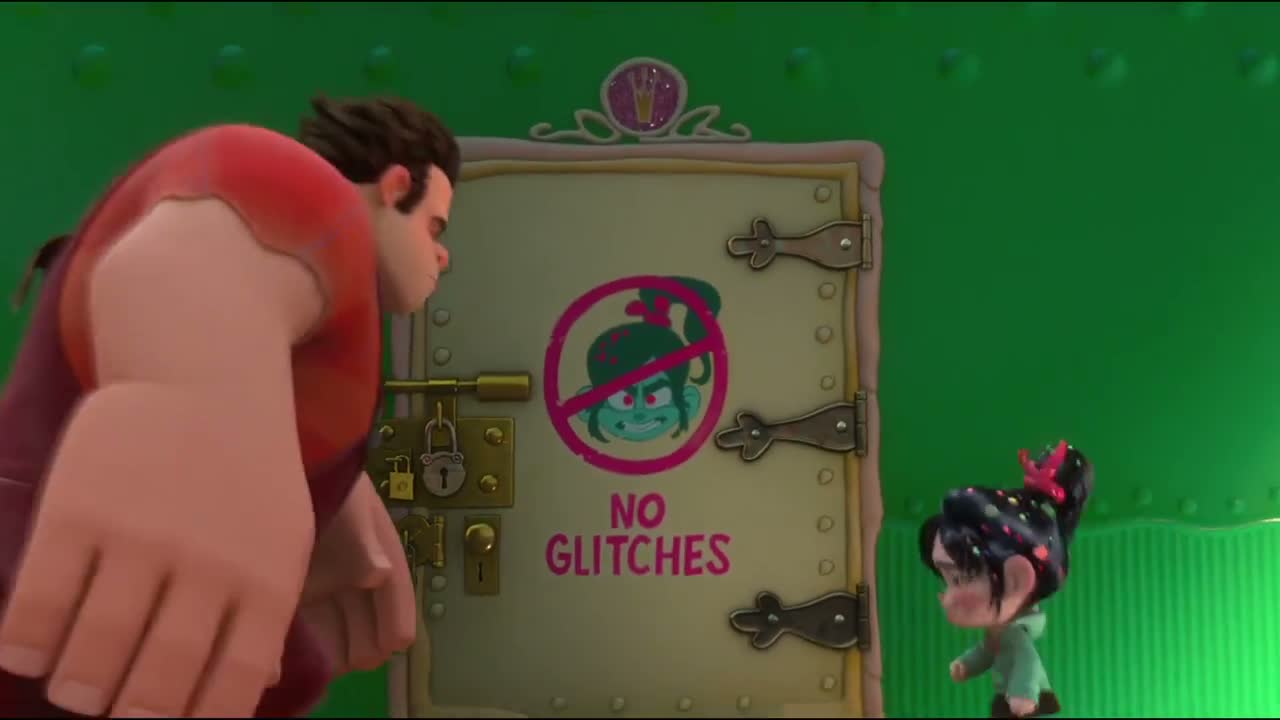 Siguiente · 13outside your comfort zoneLa escena: Ralph Bakes a Kart in a Minute
He loved the attention and couldn't stand Roadblasters drawing bigger crowds, so he left TurboTime and tried to take over the new game, wrecking both.
It means leaving your own game to mess with another, the way Turbo did. Since his disaster, the word is shorthand for breaking the one rule that keeps the arcade alive.
She treats Ralph's disappearance as proof of his nature, but the story is really a warning built on one past case. The film goes on to test whether Ralph is doomed to repeat it.
If Ralph stays gone, his game could be declared out of order and unplugged, the same fate that destroyed Turbo and both games he touched.