“The point isn t to push the bad stuff away”
It rejects the idea that healing means erasing a part of yourself.
Neutral
Capítulo 10 de 13 · 1'44"
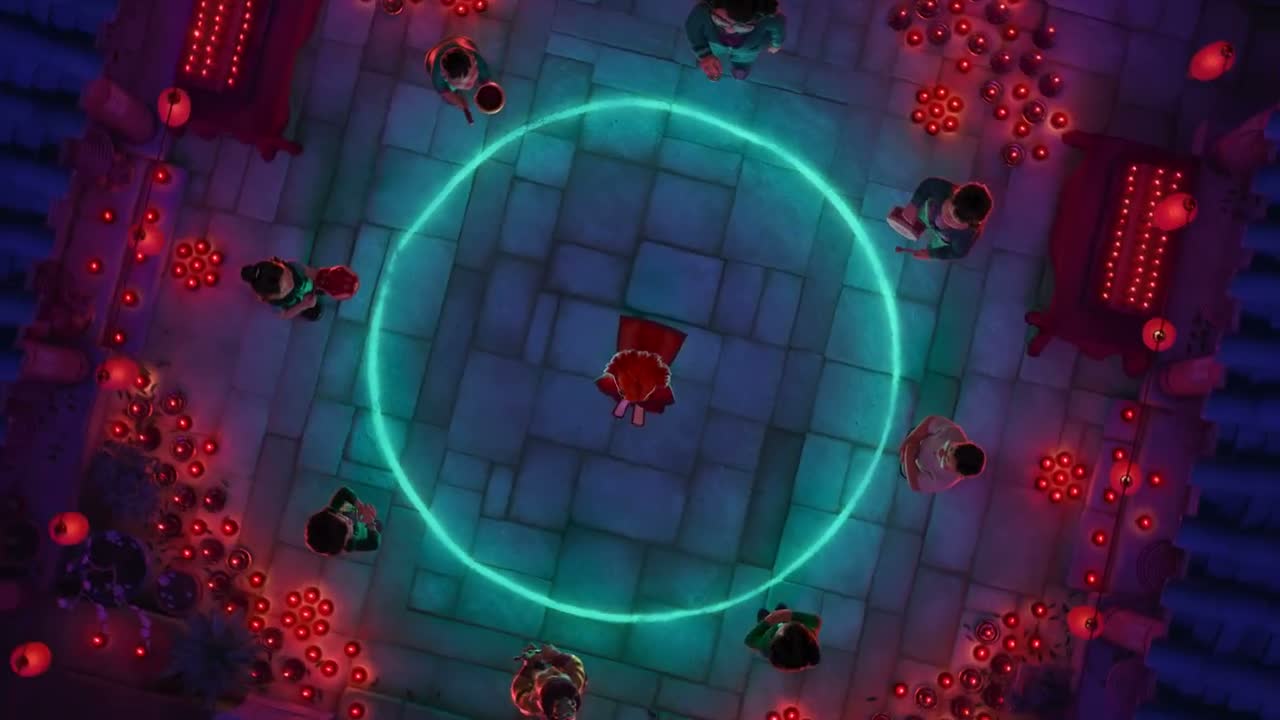
Mei expects another lecture and gets something better. Her father tells her the panda is not a defect to erase but a part of her to live with. "The point isn't to push the bad stuff away," he says. "It's to make room for it, live with it."
Jin Tells Mei to Live With the Panda
Mei's father Jin finds her at her lowest point and offers the advice nobody else has given her. Instead of telling her to control or destroy the panda, he says she should accept it and learn to live with it. He also admits that people, including her mother, have messy sides.
Everyone in the family treats the panda as a problem to be locked away, and Mei keeps failing at it. Her father reframes the whole struggle: the goal is not control but accommodation. He tells her, "The point isn't to push the bad stuff away," then finishes the thought for her: "it's to make room for it, live with it." This is the film's thesis delivered by its quietest character, and it lands because he never scolds her. He also recalls the past — "She almost took out half the temple." — so Mei can picture her mother as someone who once lost control too, rather than only an authority to obey. What Mei hears is that being messy does not disqualify her from being loved, which is exactly what she needs before she can face her family again.
A1–C2 es la escala MCER. Las tarjetas por encima del nivel elegido se atenúan y la reproducción no se pausa en ellas.
“The point isn t to push the bad stuff away”
It rejects the idea that healing means erasing a part of yourself.
Neutral
“it s to make room for it live with it”
Coexistence offered as the practical alternative to exile.
literary
“People have all kinds of sides to them Mei And some sides are messy”
A plain, forgiving statement of what a person is made of.
literary
“She almost took out half the temple”
A wild exaggeration that shows power better than any explanation.
Informal
Siguiente · 11too good to be trueLa escena: Mei Refuses the Ritual and BoltsBecause trying to lock it away has only made her miserable. He argues that the panda is part of her, so the healthier answer is to make room for it rather than fight it.
He does not attack Ming. He humanizes her instead, telling Mei that her mother once fought her own mother and lost control too, which helps Mei understand rather than simply obey.
He means that people are not consistent: everyone holds contradictory feelings and flaws. It is his way of telling Mei that being messy does not make her bad.
No. He arrives calm and curious, and he never scolds her. He offers an answer instead of a punishment, which is why Mei is able to listen.
It has wrecked things before — the line about someone almost destroying half the temple hints at how much damage a panda can do when it is out of control.