
“You, sir, are guilty of disseminating disbelief.”
Por qué es buena
A vibe-killing complaint is filed like a statute, and the paperwork voice is the joke.
Registro
Formal
Úsala tú
You are guilty of abandoning the group chat.
Capítulo 1 de 4 · 2'15"
Someone is charged with spreading disbelief and killing dreams, then a one-week tooth-fairy sentence becomes two because he called himself a tooth fairy. "You, sir, are guilty of disseminating disbelief" is the formal charge. The extra week follows the mockery. Under the speech about wings and manners is a fight over who may finish speaking.
❝ Monólogo · 10 frases Guilty of Spreading Disbelief
❝ Monólogo · 7 frases Two Weeks for the Extra Gall
A man greeted as Mr. Thompson is told his outfit was a foul-up. He is called guilty of spreading disbelief and killing dreams. When he cuts in, the speaker starts again, then says that a pair of wings makes manners go out the window. A normal one-week tooth-fairy sentence becomes two weeks because he called himself one. He is sent to flying school.
On the surface this is a sentencing. A man is told he is guilty of disseminating disbelief, of killing dreams, of "first-degree murder of fantasy." Someone tries to ask whether this is about Tess and is cut off. The speaker then stays on the interruption. "You just interrupted me again while I was admonishing you for interrupting me." The wings lines set policemen and firemen beside a pair of wings, then "all manners go out the window." The boasts that follow turn silly. "You have no idea what I'm capable of." "Maybe I breathe fire." "You don't know." Then the punishment lands. The normal sentence is one week. Two weeks is the surcharge for "the unmitigated gall" of calling himself a tooth fairy and making "a mockery of everything we stand for." He is taken toward flying school, told he gets to meet Jerry, and the tutu question is followed by "Yes" and "Huge."
A1–C2 es la escala MCER. Las tarjetas por encima del nivel elegido se atenúan y la reproducción no se pausa en ellas.
“You, sir, are guilty of disseminating disbelief.”
A vibe-killing complaint is filed like a statute, and the paperwork voice is the joke.
Formal
“I hadn't finished speaking. Did I look as though I had finished speaking?”
She skips a plea to continue and makes the interruption look like bad eyesight.
Formal
“You just interrupted me again while I was admonishing you for interrupting me.”
The sentence loops his offense inside the scolding, so the mistake plays twice.
Formal
“You have no idea what I'm capable of.”
The threat stays blank, so the listener has to imagine the worst.
Informal
“Shouldn't you be more in awe of somebody with wings than without?”
The comparison places somebody with wings on the side that deserves more awe, and the question dares him to admit the rudeness.
Formal
“Does this tutu make my butt look big?”
Right after the ruling he borrows a fitting-room question and the ceremony collapses.
Informal
You just interrupted me again while I was admonishing you for interrupting me. Do I not look official enough? I don't understand... ...why policemen or firemen don't get interrupted... ...but you add a pair of wings and suddenly all manners go out the window. Shouldn't you be more in awe of somebody with wings than without? You have no idea what I'm capable of. I could just fly up into the air and do something crazy. Maybe I breathe fire. You don't know.
In order to pay your debt to humanity... ...you are hereby ordered to serve time as a tooth fairy. The normal sentence is one week... ...but because you have the nerve, the unmitigated gall... ...to actually call yourself a tooth fairy... ...thus make a mockery of everything we stand for... ...I'm sentencing you to two weeks' tooth-fairy duty.
Tooth Fairy: tu progreso
Capítulo 1 de 4 · quedan unos 8 min
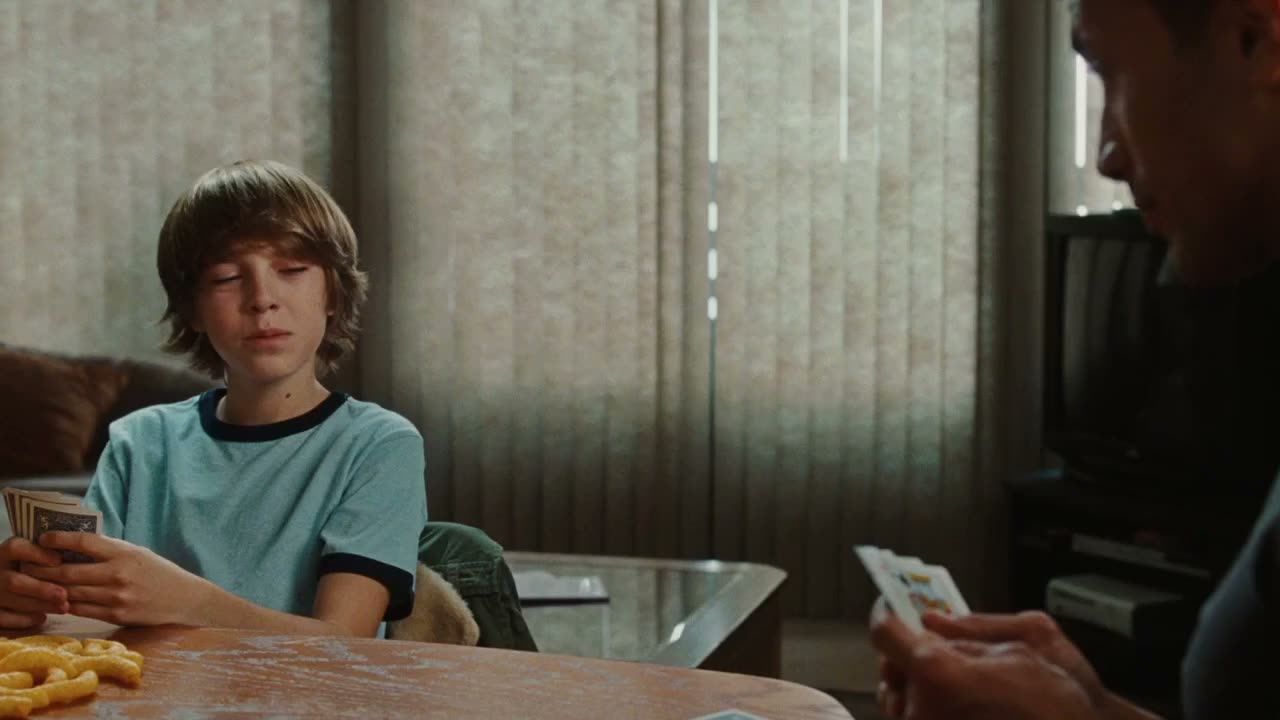 Siguiente · 02rub it inLa escena: The Wrong Question at Cards
The speaker says "Committing first-degree murder of fantasy," then "which by fairy law." The lines list it with disseminating disbelief and killing dreams. They never describe a body or a physical killing, only this charge and the tooth-fairy sentence.
The speaker stops to ask, "Did I look as though I had finished speaking?" and then notes that the interruption came during a scolding about interrupting. The argument is about who gets to finish.
Disseminating disbelief, killing dreams, and first-degree murder of fantasy, which the speaker ties to fairy law. The lines state the charge and the sentence, not the earlier act that led here.
The speaker asks why those uniforms are not interrupted, while a pair of wings makes manners go out the window, and whether someone with wings should inspire more awe. It is an argument about respect, not a new charge.