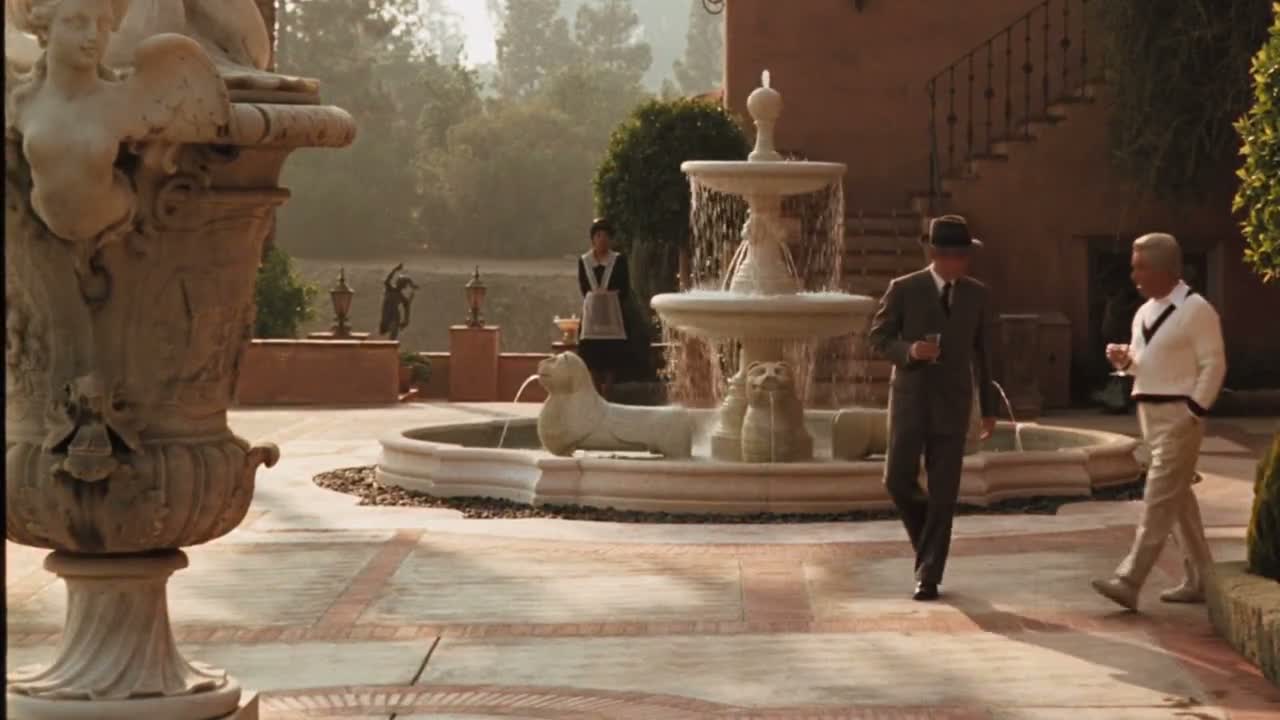
00:00 / 04:14
00:00 / 04:14

Bonasera Asks for Justice, Explained

The Godfather · 1972

Capítulo 1 de 9 · 4'14"

A father shows up on a daughter's wedding day because the court let two boys walk free. He wants them dead. What he gets is a lecture: he had courts of law and never wanted this friendship. "You don't even think to call me Godfather" turns justice into a bond, not a fee.

Asking for helpPersuasionAskingSaying noB2americanClean

Key moments

Start here, then watch the full scene
  1. The Court Let Them Walk

    0:02–1:22
    80s
  2. You Never Wanted My Friendship

    1:28–2:38
    71s
  3. Justice Given as a Wedding Gift

    3:08–4:13
    65s

Bonasera Asks for Justice, explained

What happens

On a daughter's wedding day, a man tells Don Corleone that the court suspended the sentence and two boys went free. He wants them dead and is refused. He is told he never offered friendship, and that his daughter is still alive. The word Godfather is spoken. A future service is left open, and the justice is given as a wedding gift.

What's really going on

A suspended sentence, two boys free the same day, and a smile in the courtroom: that is the story. "I want them dead" gets a flat answer, "That I cannot do." The speech that follows prices the years of distance. No cup of coffee, a godmother to the only child, paradise in America, police protection, courts of law, and a fear of being in debt. "Give me justice" therefore sounds like an order without respect. He will not offer friendship, and he will not say Godfather. On a daughter's wedding day he is asking for murder for money. "That is not justice. Your daughter is alive." Suffering can be matched to hers. A paid killing will not be. Once friendship is offered and Godfather is spoken, a service is left for someday, and it may never come. Until then, the justice is a gift.

Key lines & what they mean

“Some day, and that day may never come, I'll ask a service of you.”
The favor is granted now, but the return is unnamed. A service might be asked later, and it might never be asked at all.
“That is not justice. Your daughter is alive.”
Death for the two is refused. She survived, so the harm to be answered is her suffering, not a killing bought on a wedding day.
“But let's be frank here. You never wanted my friendship.”
Spoken after years without a cup of coffee. The charge is plain: this friendship was never wanted, so the request has nothing to stand on.
“Why did you go to the police? Why didn't you come to me first?”
The insult is the order of the doors. The police and the court came before this one, and that choice is what the question punishes.

Theme

  • Justice — A suspended sentence is called no justice, but killing for money is refused because the daughter is alive.
  • Friendship — Years without coffee or friendship are the real charge, and the favor starts only after friendship is offered.

Qué aprendes en este capítulo

Puntos de enseñanza

Repasa justo después de ver
Mi nivel1/4

A1–C2 es la escala MCER. Las tarjetas por encima del nivel elegido se atenúan y la reproducción no se pausa en ellas.

The Godfather: tu progreso

Capítulo 1 de 9 · quedan unos 28 min

Siguiente · 02run him out of the businessLa escena: Woltz Refuses Johnny the Role

Ideas clave

Lo que te llevas
  1. Loyalty is the order of who you ask
  2. Respect is the ticket into the room
  3. A gift of justice still opens a debt
  4. A polite refusal can name one act only

Preguntas frecuentes

La pregunta, luego la frase
Why is the plea for death refused?

The reply calls it no justice, because the daughter is alive. The same speech also refuses to murder for money on a daughter's wedding day. What stays open is suffering matched to hers, not death.

Why does going to the police first matter?

The question is why the police were tried before this door. A good living, police protection, and courts of law are given as the reason this friendship was never wanted, and why the debt was feared.

Is this a request for justice or for revenge?

He uses the word justice, then says he wants them dead, then asks how much to pay. The answer splits the two: her suffering can be answered, but a paid killing is not justice.

What is promised at the end of the scene?

Justice will be given as a gift on a daughter's wedding day. A service may be asked someday, and that day may never come. The condition named in the room is friendship, not a fee.