
“And everything that is past is prologue to this.”
Por qué es buena
It reframes every failure as a prologue, turning a slump into the setup for what comes next.
Registro
literary
Úsala tú
Everything that is past is prologue to this new role.
Capítulo 14 de 17 · 4'07"
Mike has barely eaten or slept for two days after the Dresden, and Rob forces the question: look at what you have, not at what you lack. "You gotta let go of the past, and Mikey, when you do I'm telling you the future is beautiful," he says. Then Mike asks how Rob got over his own heartbreak.
❝ Monólogo · 6 frases Rob's 'the Future Is Beautiful' Speech
❝ Monólogo · 7 frases the pain-fading confession
Healing is told as physical pain, and the twist that you miss it lands hard.
Two days after the incident at the Dresden, Rob finds Mike moping at home and pushes him to eat. Mike says he has nothing to show for his time in LA, but Rob argues it depends how you look at it and that Mike only sees what he lacks. Rob insists the future is beautiful and finally drags him out to eat.
The pep talk works by refusing Mike's framing. Mike measures himself against what he has not achieved — no big roles, no call from Nikki — so Rob answers with a different ledger: "You don't look at the things that you have." Then he goes further, turning his own move to Los Angeles into evidence; he came because he saw how well Mike was doing. The final section is the film's most quoted, and the most double-edged: "You gotta let go of the past, and Mikey, when you do I'm telling you the future is beautiful." Mike, who wants a deadline, asks how long it took, and Rob's answer — that sometimes it still hurts, that you almost miss the pain — quietly undercuts the big speech. The scene argues that optimism and grief can share a table, and that getting over someone is less a decision than a slow daily subtraction.
A1–C2 es la escala MCER. Las tarjetas por encima del nivel elegido se atenúan y la reproducción no se pausa en ellas.
“And everything that is past is prologue to this.”
It reframes every failure as a prologue, turning a slump into the setup for what comes next.
literary
“You gotta let go of the past, and Mikey, when you do I'm telling you the future is beautiful.”
A command followed by a promise, and the spoken rhythm makes the encouragement feel urgent and warm.
Informal
“You don't look at the things that you have.”
It names the root of so much unhappiness in one plain sentence, a quiet slap of truth.
Neutral
“You only look at the stuff you don't have.”
A plain diagnosis: the problem is not your life, it is where you keep looking.
Neutral
You gotta let go of the past, and Mikey, when you do I'm telling you the future is beautiful. All right? Look out the window. It's sunny every day here. It's like manifest destiny. Don't tell me we didn't make it. We made it. We are here. And everything that is past is prologue to this. All of the shit that didn't kill us is only- You know. All that shit.
I don't know. Sometimes it still hurts. You know how it is, man. It's like... You wake up every day, it hurts a little bit less... then you wake up one day and it doesn't hurt at all. And the funny thing is... This is kinda weird, but it's like... it's like you almost miss that pain.
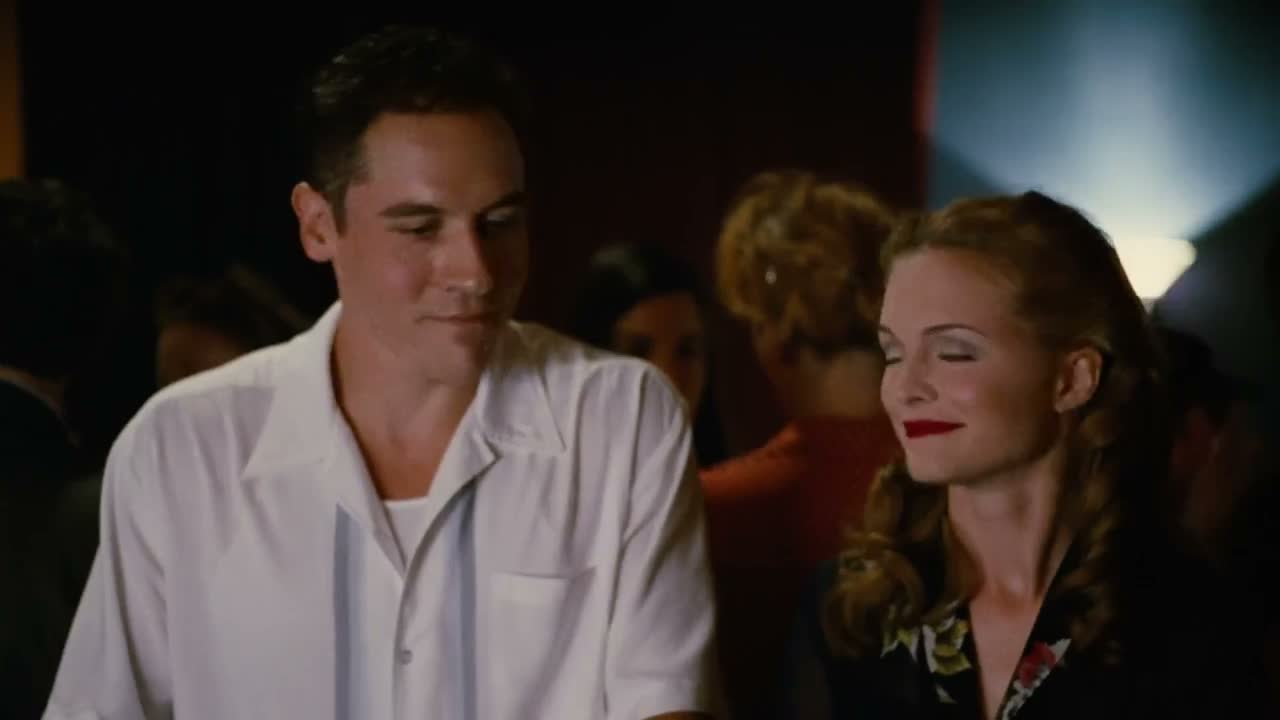 Siguiente · 15tell me about itLa escena: Mike Meets Lorraine at the Bar
He wants Mike to stop defining himself by his ex and his missed roles. By saying the future is beautiful, Rob tries to replace Mike's despair with a reason to keep going.
He wants a timeline. Rob's answer is not comforting in the usual way: sometimes it still hurts, and recovery is a slow daily lessening rather than a decision.
He says part of the reason was seeing how well Mike was doing. If Mike could make it, Rob thought he could too, which is why Mike's self-doubt worries him so much.
To make the move West feel fated. He points out the constant sunshine and treats their being in Los Angeles as proof they already made it, not as a place to keep doubting.