
“You're not a Nazi, Jojo.”
Por qué es buena
It separates what Jojo wears from who he is, and lands harder because she repeats it.
Registro
Neutral
Úsala tú
You're not a failure, you're just tired.
Capítulo 13 de 18 · 2'40"
Jojo shows off his uniform and brags about catching a Jew, while his friend shrugs that the prisoners seemed ordinary. Then, upstairs, the scene turns serious: the girl tells Jojo plainly that he is not one of them, only a boy who likes a uniform and wants a club to belong to. 'You're not a Nazi, Jojo.'
Jojo Brags to Yorki About Catching a Jew
❝ Monólogo · 6 frases Elsa's identity speech
She repeats the denial, unpacks what he only looks like, then lands the verdict like a hammer.
Jojo runs into his friend Yorki and shows off his new uniform, claiming the material is a scientific marvel, then tells him he has caught a real Jew. The friend is unimpressed and says the prisoners he saw looked normal. Later, Jojo asks the girl upstairs to draw something for his book, and she tells him he is not a Nazi at all, just a boy who wants to belong.
The chapter puts two conversations side by side and lets them answer each other. With Yorki, Jojo performs the role of the loyal soldier, bragging about his uniform and his trophy Jew, and Yorki's reply quietly deflates him: 'Personally, I didn't see what all the fuss was about.' Upstairs, the girl does something no adult in Jojo's life has done — she separates him from the ideology he is wearing. 'You're not a Nazi, Jojo,' she says, then explains what he actually is: a ten-year-old who likes swastikas, a funny uniform, and the feeling of belonging to a club. That is both comfort and a verdict. The kiss they discuss is a small, human negotiation, but the real subject is identity: whether Jojo is defined by the uniform he has put on or by the child still underneath it.
A1–C2 es la escala MCER. Las tarjetas por encima del nivel elegido se atenúan y la reproducción no se pausa en ellas.
“You're not a Nazi, Jojo.”
It separates what Jojo wears from who he is, and lands harder because she repeats it.
Neutral
“But you are not one of them.”
After listing how he looks, it draws the line between imitation and belonging.
Neutral
“You will be kissed, Jojo.”
A simple future tense overturns the boy's self-pity and promises him a future.
Neutral
“Personally, I didn't see what all the fuss was about.”
The flat delivery quietly exposes how absurd an exaggerated fear really is.
Informal
“Let's just agree to disagree.”
It ends a deadlocked argument without surrender, keeping both sides whole.
Informal
You're not a Nazi. Uh, I'm massively into swastikas, so I think that's a pretty good sign right there. You're not a Nazi, Jojo. You're a ten-year-old kid who likes swastikas and likes dressing up in a funny uniform and wants to be part of a club. But you are not one of them.
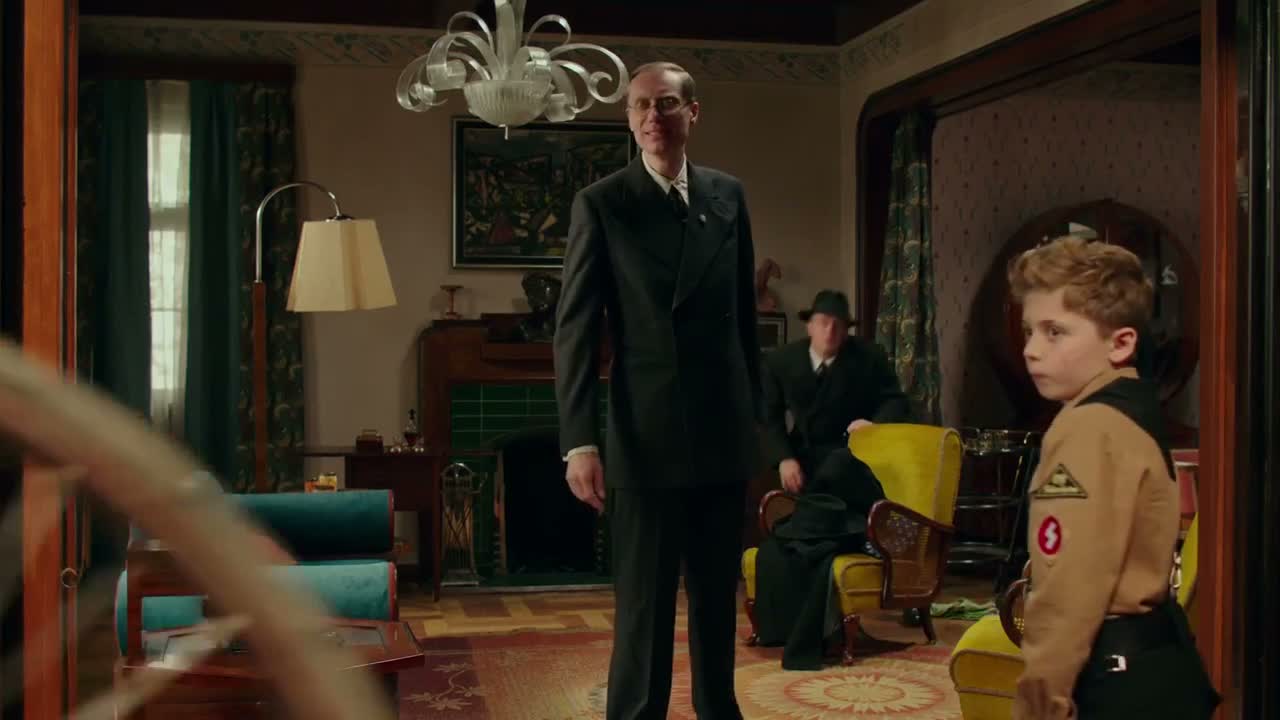 Siguiente · 14routine inspectionLa escena: The Gestapo Inspects Jojo's House
Because she sees a ten-year-old who likes the uniform, the swastikas and the feeling of belonging, not a committed believer. She is separating the child from the ideology he has been handed.
It means 'and certainly not.' If hanging out is already illegal, let alone kissing means kissing is even more forbidden. The phrase builds one idea on top of another.
Because they looked normal to him, not frightening. His casual comment quietly undercuts the propaganda both boys have been taught.
The kiss is a small, human question between two lonely kids. It also forces the bigger issue of whether Jojo can be close to Elsa at all, given who he is supposed to be.
It ends an argument without a winner, letting each side keep their view. Here it is a way to stop fighting when neither will change the other's mind.