00:00 / 02:28
00:00 / 02:28

Sean Tells Will About Real Loss, Explained

Good Will Hunting · 1997

Capítulo 8 de 21 · 2'28"

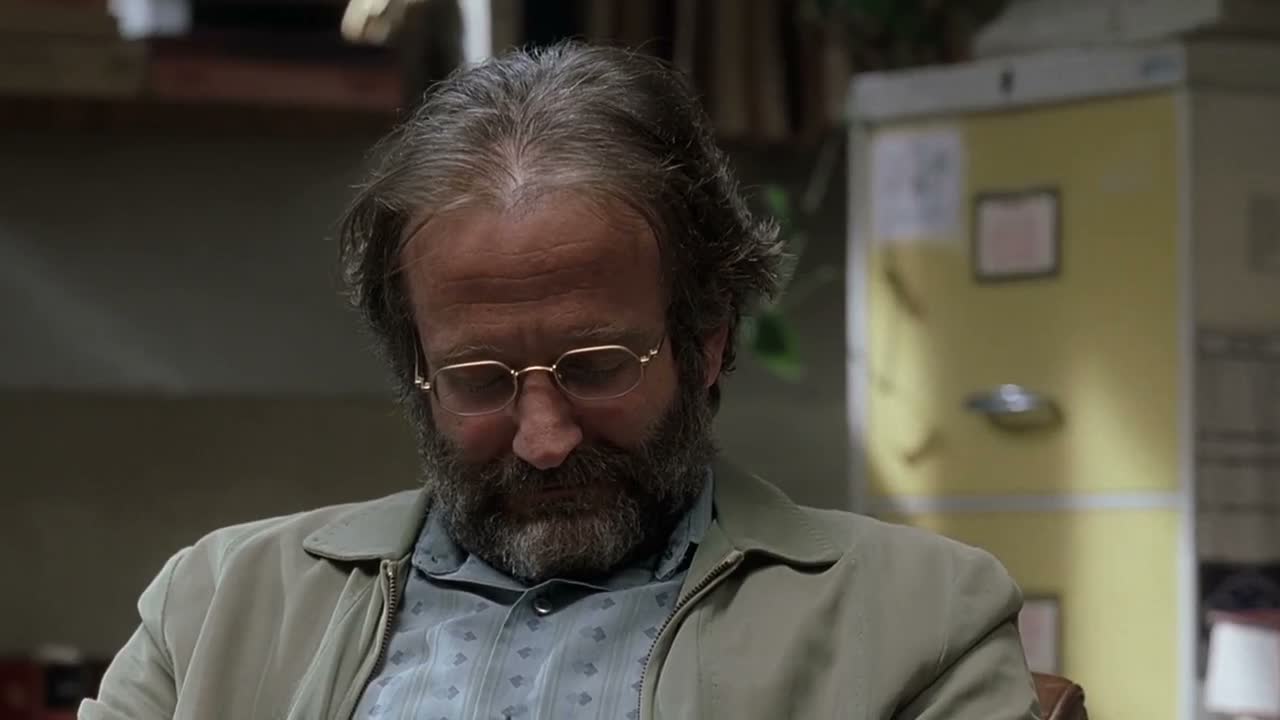
On a park bench, Sean explains what Will has never felt — losing someone you love more than yourself. Will listens without a word. The speech isn't comfort; it's a verdict: 'You don't know about real loss.'

At the doctorMonologuesConfrontingExplainingDoctor & patientC1fastamerican

Key moments

Start here, then watch the full scene
  1. ❝ Monólogo · 14 frases Sean Explains What Real Loss Is

    0:34–0:55
    21s
  1. ❝ MonólogoSean on love and loss14 frasesPracticar ↗

Sean Tells Will About Real Loss, explained

What happens

On a bench in the park, Sean does the talking. He tells Will that he has never been truly vulnerable with anyone, never loved someone more than himself, and so has never known real loss. Then he turns it on Will: a genius, yes, but underneath, a scared kid.

What's really going on

Sean's speech works because it refuses to flatter. Will can out-argue anyone, so Sean stops arguing and describes instead — a love that survives 'through anything, through cancer,' a person who could 'rescue you from the depths of hell.' The point is that Will has read about these feelings but never risked them, which is why the closing line lands: 'You're terrified of what you might say.' Sean isn't diagnosing; he's betting that Will recognizes the fear. 'Your move, chief' hands the session back to him.

Key lines & what they mean

“'cause that only occurs when you love something more than you love yourself.”
Sean's definition of real loss: it only happens when someone matters more to you than you do. He's saying Will has never loved that way.
“I doubt you've ever dared to love anybody that much.”
The charge behind the whole speech. 'Dared' is the key word — for Sean, loving that much is courage, and for Will it's a risk he avoids.
“I see a cocky, scared shitless kid.”
Sean strips away Will's brilliance and names what's underneath: arrogance built over fear. It's the bluntest line in the scene.
“Because you know what? I can't learn anything from you I can't read in some fuckin' book.”
Sean dismisses Will's book-smart armor. He's not interested in what Will knows; he wants to know who Will is.

Theme

  • Death & grief — Sean defines real loss through his wife's illness; Will has never let himself grieve anything.
  • Courage — The scene is about the risk of being open — the one risk Will keeps refusing.

Qué aprendes en este capítulo

Puntos de enseñanza

Repasa justo después de ver
Mi nivel0/6

A1–C2 es la escala MCER. Las tarjetas por encima del nivel elegido se atenúan y la reproducción no se pausa en ellas.

Good Will Hunting: tu progreso

Capítulo 8 de 21 · quedan unos 60 min

← Anterior
Siguiente · 09save someone the suspenseLa escena: Sean's Perfect for Each Other Speech

Ideas clave

Lo que te llevas
  1. Real loss is measured by how much you loved.
  2. Sean accuses Will of never daring to love.
  3. The vulgar words mark the moment patience runs out.
  4. A rhetorical question can cut deeper than a shout.

Preguntas frecuentes

La pregunta, luego la frase
Why does Sean compare Will to a scared kid?

Will hides behind his intelligence. Sean's point is that all that confidence is armor, and underneath it Will is afraid of being seen — which is why he won't talk about himself.

Why does Sean bring up his wife's illness?

He uses his own experience to show what loving someone completely looks like. He slept in a hospital room for two months holding her hand — something Will has never done for anyone.

Does Will say anything during the speech?

No. Will stays silent on the bench the whole time, which is the point — Sean talks until Will has nothing left to hide behind, then ends with 'Your move, chief.'

Why does Sean end with 'Your move, chief'?

He's finished talking and wants Will to respond. It's a chess phrase for 'your turn,' handing control back to Will and daring him to finally open up.

Why won't Will talk about himself?

Sean's answer is fear: 'You're terrified of what you might say.' Opening up means admitting things he'd rather keep buried, so silence and cleverness are his defenses.