
“Is there anything else you can tell me about him?”
Por qué es buena
An open question that invites more detail without leading the witness.
Registro
Neutral
Úsala tú
Is there anything else you can tell me about your last role?
Capítulo 9 de 16 · 2'13"
Two wanted men are on the run, and a witness is trying to help the police picture them. The first man was just 'funny-looking'; the second, she says, 'looked like the Marlboro Man.' She immediately second-guesses herself, admitting it may only be because he chain-smoked Marlboros.
He Looked Like the Marlboro Man
In a police interview, an investigator asks a witness for more details about the two men she saw. The witness can barely describe the first one, but the second reminds her of the Marlboro Man, the rugged cowboy from the cigarette ads. She also remembers that the men said they were heading to the Twin Cities.
What the scene really shows is how thin eyewitness memory is, and how the police have to work with it anyway. The witness reaches for the most ordinary reference she has, a cigarette ad, and then instantly doubts herself: 'But maybe I'm saying that, you know, 'cause he smoked a lot of Marlboros.' It's played for comedy, but it's also honest: people describe strangers through whatever images they already carry. The one solid detail she gives isn't a face at all: 'they said they were going to the Twin Cities.' That scrap of information is what actually moves the investigation. The scene sets up how the case will be cracked, not by sharp-eyed witnesses but by patient police work and a lucky break.
A1–C2 es la escala MCER. Las tarjetas por encima del nivel elegido se atenúan y la reproducción no se pausa en ellas.
“Is there anything else you can tell me about him?”
An open question that invites more detail without leading the witness.
Neutral
“You know, he looked like the Marlboro Man.”
It pins a face to a shared image, saying more than any list of features could.
Neutral
“Come on, plug me into the ozone, baby! Come on!”
One absurd plea at a dead TV shows Carl's whole temperament in a single breath.
Informal
“Hey, they said they were going to the Twin Cities.”
After struggling, the witness finally offers the one lead that points the case to the cities.
Neutral
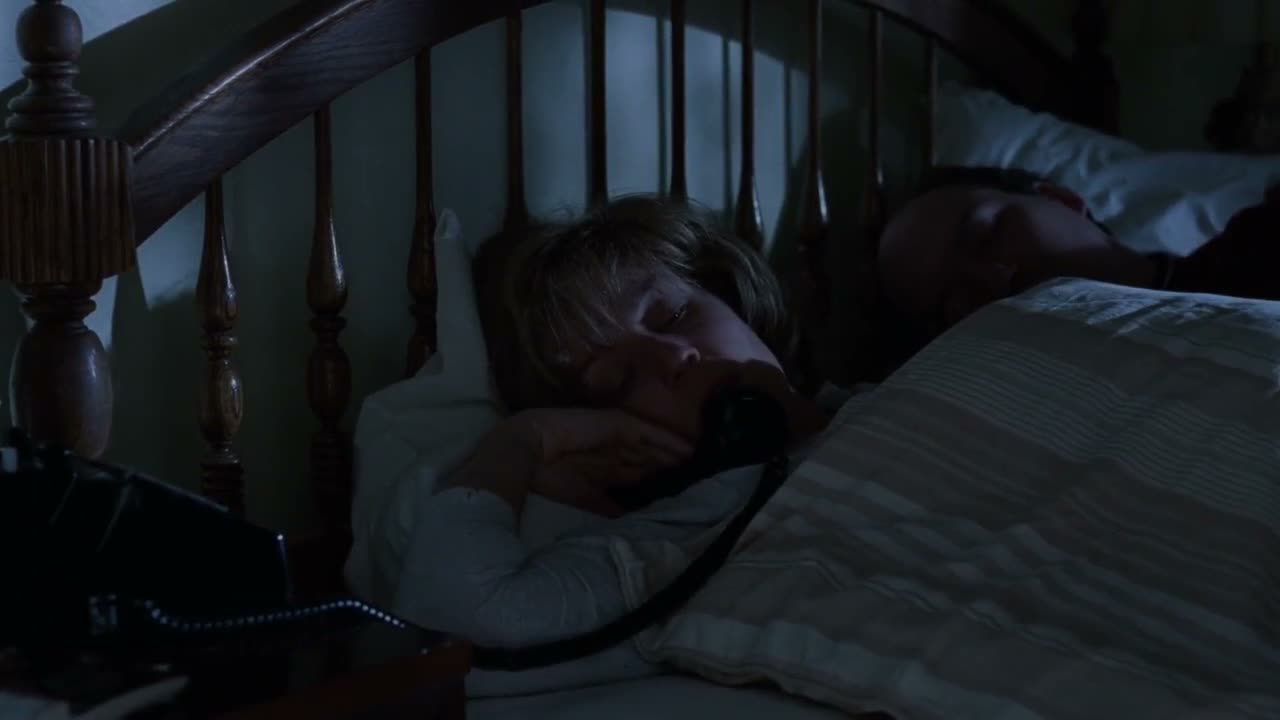 Siguiente · 10a deal's a dealLa escena: Kidnappers Call Jerry for More Money
The Marlboro Man was the rugged cowboy in cigarette ads, so she reaches for the toughest image she knows to describe a big, intimidating stranger, though she admits it may just be because he smoked Marlboros.
It's a folksy Upper Midwest way of saying 'yes, absolutely.' The investigator uses it to show the witness's lead is genuinely useful, and it's one of the film's signature regional touches.
Almost by accident. Her description of the men is vague and second-hand, but her last memory, that they were headed to the Twin Cities, is the first real lead, and it points the manhunt in the right direction.
That's what they told the witness, and it fits where they were headed after the kidnapping. The detail matters less as a destination than as proof that the witness was paying attention to the right thing.