
“This is the last time I saw you.”
Por qué es buena
A flat statement of finality that lands harder than any outburst.
Registro
literary
Úsala tú
This is the last time I'll ask you for anything.
Capítulo 7 de 20 · 3'24"
Technicians hook Joel up to the memory-erasing machine and walk him through old objects to map what's about to be deleted. He tries to focus, but the objects keep pulling him under, until the journal entry about Clementine breaks the readout and he blurts, "Déjà vu."
Joel Realizes He's Inside His Memory
The Last Memory of Clementine
At Joel's apartment, two Lacuna technicians set up the procedure that will erase Clementine from his memory. They hand him objects and ask him to react to each one; he is told not to describe them out loud so the readouts stay clean. When they read his journal aloud, the equipment glitches and Joel slips into his own mind.
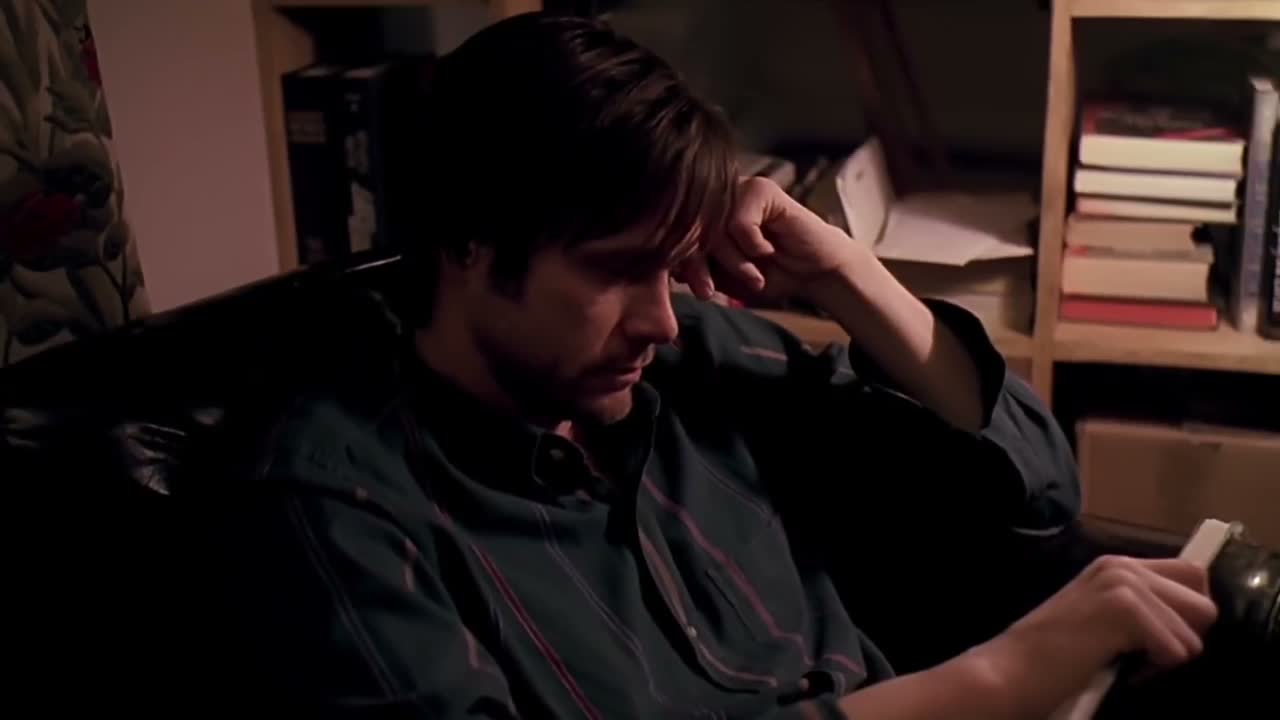
The scene is the calm before a deletion, and it plays like a medical intake. Joel is asked to react to objects but to say nothing, so that his feelings can be measured rather than explained; the whole point is to map memories precisely enough to erase them. He notices it happening before anyone admits it: "I'm in my head already, aren't I?" The technicians treat his apartment with mild contempt as they wait out the long night, and the journal entry — a line naming Clementine — is the spark that makes the procedure fail. The last thing on the readout is "This is the last time I saw you." It lands like the memory fighting to stay.
A1–C2 es la escala MCER. Las tarjetas por encima del nivel elegido se atenúan y la reproducción no se pausa en ellas.
“This is the last time I saw you.”
A flat statement of finality that lands harder than any outburst.
literary
“I'm in my head already, aren't I?”
A self-asking tag turns a sci-fi premise into a shiver of doubt.
Informal
“This place is sort of a dump, don't you think?”
A casual insult wrapped in a tag question, teasing rather than cruel.
Informal
“We'll dispose of these mementos when we're done here.”
Disposal delivered as routine housekeeping, calm on the surface and cold underneath.
Neutral
 Siguiente · 08freak outLa escena: Clementine Wrecks Joel's Car
Technicians are mapping his memories before erasing Clementine. They show him objects to trigger specific memories, record his reactions, and prepare to wipe the memories that follow each one.
Each object triggers a different memory, which lets the equipment locate the exact memories connected to Clementine so they can be targeted and erased.
It means the eerie sense of having lived something before. Joel says it when a memory glitches, hinting that he is already inside the procedure and repeating a moment he can't quite place.
They want an emotional readout, not an explanation. Naming or describing an object would shape his reaction, so they keep him silent and let the memories surface on their own.
Reading the entry — 'I met someone tonight... her name is Clementine' — overloads the equipment and shifts the scene: the memory fights back, and a routine procedure begins to go wrong.