
“This is the peak of my career.”
Por qué es buena
A small man's proudest moment is set on a pedestal, touching and comic at once.
Registro
Neutral
Úsala tú
Cooking for the whole team was the peak of my career.
Capítulo 5 de 22 · 2'49"
The royal visit turns Downton upside down. Mr. Bakewell is thrilled to cater, calling it "the peak of my career," while the family insists they will travel light. A dressmaker's quiet pride and a debate over whether Princess Mary looks sad or dignified round out a day of manners.
Mr. Bakewell Plans the Royal Dinner
At Downton, preparations for the King and Queen are underway. In the kitchen, Mr. Bakewell, the local caterer, says this job is the peak of his life, and he and Mrs Patmore plan the luncheon and dinner. Upstairs, the family decides to travel without servants, and Mary meets Miss Lawton, the Queen's dressmaker.
The coming royal visit is less a political event than a chance for everyone to perform a role well. The catering is a professional triumph — "This is the peak of my career," Mr. Bakewell says — and the house's own staff are told to stand aside for the royal servants. Upstairs, the talk is all restraint: no maid, no valet, "We're modern folk," and a firm line about how royal women should look — "not meant to grin like Cheshire cats." Even the Queen's dressmaker is measured by reputation, answering "My reputation found me" when asked how she was chosen. The scene ends on service as virtue: Carson returns to work because he "should go where I could do the most good." In a house adjusting to a changed world, doing one's job well is the shared code.
A1–C2 es la escala MCER. Las tarjetas por encima del nivel elegido se atenúan y la reproducción no se pausa en ellas.
“This is the peak of my career.”
A small man's proudest moment is set on a pedestal, touching and comic at once.
Neutral
“Royal women are not meant to grin like Cheshire cats.”
A literary allusion turns a rule of royal behaviour into a wry little joke.
Neutral
“I felt I should go where I could do the most good, milady.”
The old butler frames his return as a duty, and the plain words define him.
Formal
“What prompted you to take up the flaming sword again?”
It dresses a return to duty in mock-heroic imagery, half teasing and half admiring.
literary
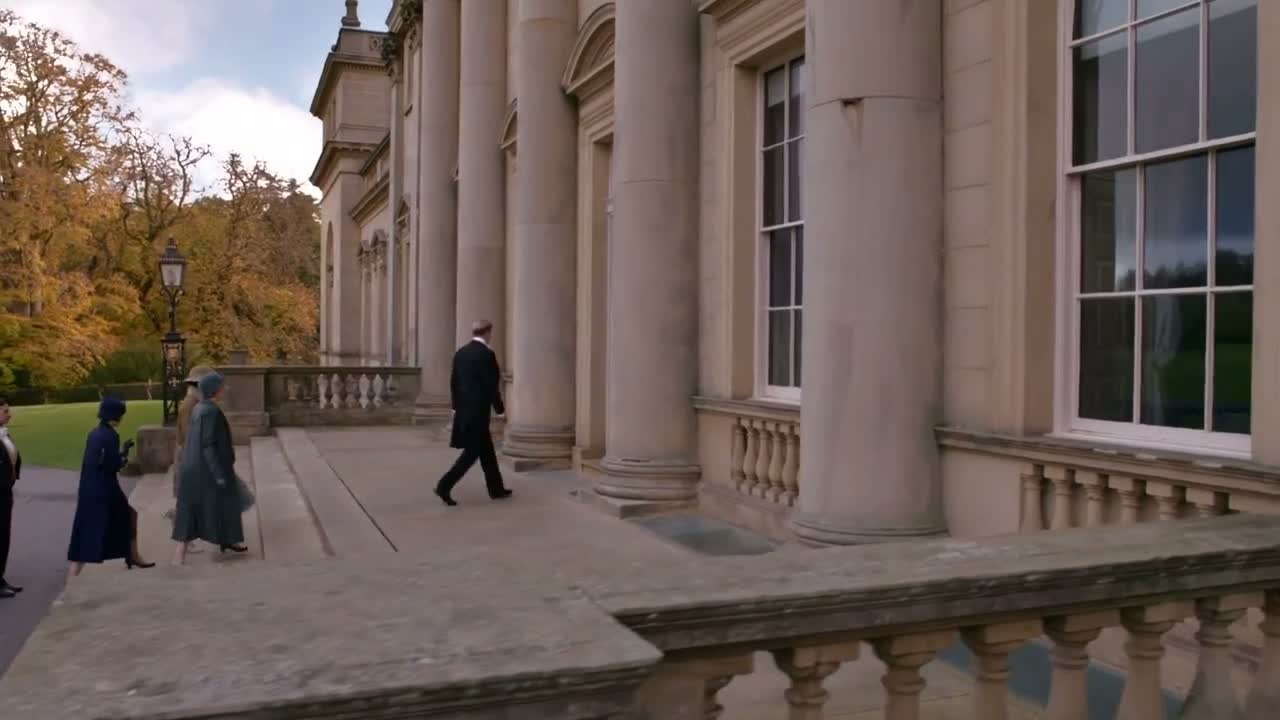 Siguiente · 06changed his spotsLa escena: Tea With Princess Mary
Winning the royal dinner is the high point of his working life. He calls it the peak of his career and even the peak of his life, because a village caterer is being trusted to serve the King and Queen.
She is the Queen's dressmaker, in service for six years. When Mary asks how the Queen found her, she answers, 'My reputation found me,' showing quiet professional pride.
They want to look modern. Robert jokes that it is 1927 and they are modern folk, so they bring no maid and no valet, and Nanny stays to care for Marigold while Anna looks after Mary.
He says he should go where he can do the most good. His return is presented as duty rather than a wish for status, and his old authority is described as a 'flaming sword.'
It is part of the royal schedule. The family notes that 'we're paying a call this afternoon on Princess Mary,' treating the visit as a formal courtesy, and later they debate whether she looks sad or dignified.