
“So always err on the side of caution, Carly.”
Por qué es buena
It hands you a method, not a rule: when in doubt, take the safer path.
Registro
Neutral
Úsala tú
Always err on the side of caution when testing.
Capítulo 1 de 13 · 3'05"
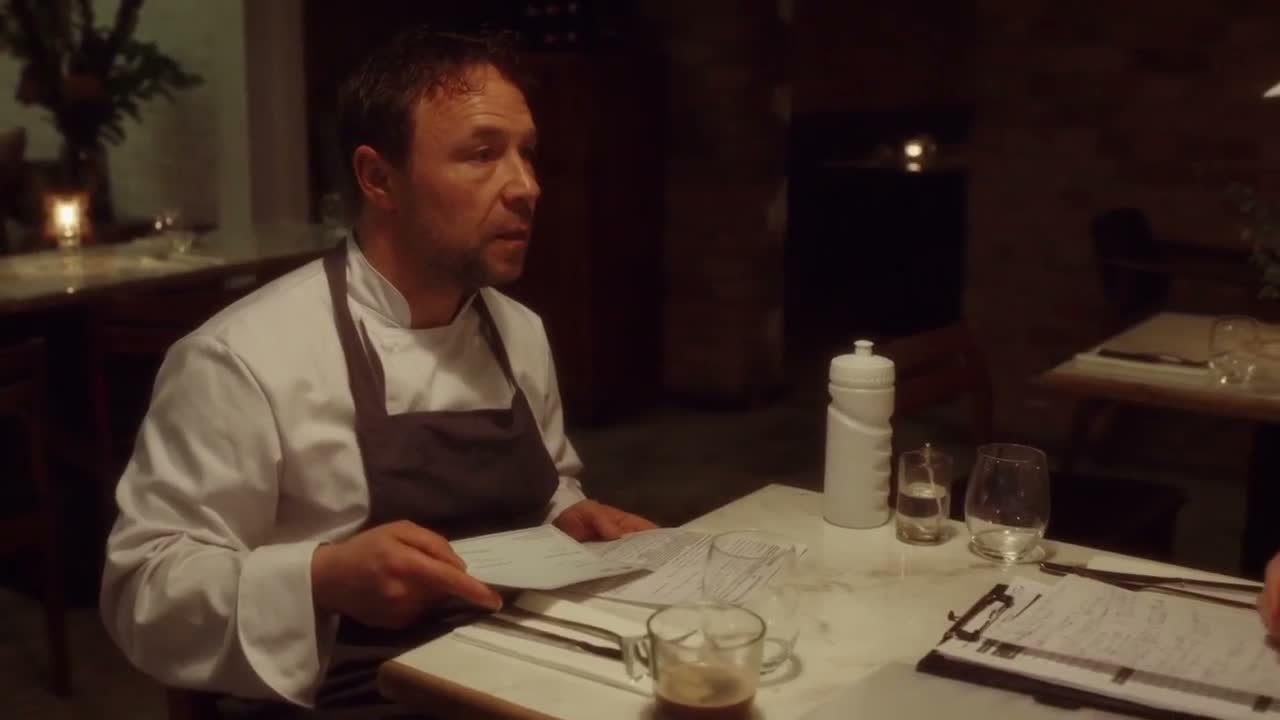
A food safety inspector walks the kitchen before service and catches the small, real mistakes: a new hire washing her hands in the prep sink, an overpacked fridge, a duck cooked to the wrong temperature. "So always err on the side of caution," she says, and the whole scene turns hygiene rules into a quiet portrait of pressure.
The Inspector Catches a Hygiene Slip
The Fridge Temperature Lesson
Before opening, a food safety inspector checks the restaurant kitchen. She finds a new hire washing her hands in the food prep sink, goes through fridge temperatures and storage rules, and quizzes the chef on how the duck is cooked and recorded. The inspection is calm and procedural, and it quietly maps the kitchen's daily discipline.
The scene looks like a checklist, and that is the point: a professional moving through a kitchen, naming every hazard in a level voice. The inspector corrects a new hire without cruelty - "Are you aware we wash our hands in the hand-washing sink?" - and turns a reprimand into a lesson on standards. The details matter more than the drama: eight degrees is regulation, five is better, and packing the fridge too full will waste food. "So always err on the side of caution" is the philosophy, borrowed from another inspector's line about not risking it for a biscuit. What the sequence quietly shows is how much of a restaurant is invisible rules that only matter the moment someone checks. It is calm, and it is the calm before the night collapses.
A1–C2 es la escala MCER. Las tarjetas por encima del nivel elegido se atenúan y la reproducción no se pausa en ellas.
“So always err on the side of caution, Carly.”
It hands you a method, not a rule: when in doubt, take the safer path.
Neutral
“Like Mr Lewis said, the other inspector, "Don't risk it for a biscuit," that's what we try and say.”
A small reward is never worth the risk; the rhyme makes the warning portable.
Informal
“Camille, I'm glad you're washing your hands, just not where we prepare food, OK?”
It praises the right instinct before correcting the wrong spot, so the rebuke arrives as care.
Neutral
“Are you aware we wash our hands in the hand-washing sink?”
A question instead of an order makes the other person draw the conclusion, which is polite pressure at its finest.
Neutral
“Quick word. Just talk me through what you're doing.”
Two short openers make an interrogation feel like a chat, which is how the details come out.
Neutral
Boiling Point: tu progreso
Capítulo 1 de 13 · quedan unos 37 min
 Siguiente · 02have a nose aboutLa escena: Health Inspector Downgrades the Kitchen
She is carrying out a routine food safety inspection before the restaurant opens, checking hygiene, storage and cooking standards.
She washed her hands in the sink used for preparing food instead of the hand-washing sink, which is a basic hygiene breach.
It means choosing the safer option when you are unsure. The inspector uses it to say it is better to be too careful than to risk food going off.
Eight degrees is the regulation maximum, but the inspector says five would be ideal and warns that overpacking stops the cold air circulating.
To check that the chef cooks it to the right internal temperature and records the checks, which is part of proving the kitchen is safe.