00:00 / 02:39
00:00 / 02:39

Mick Is Confronted with His Record, Explained

Bad Boys · 1983

Capítulo 3 de 9 · 2'39"

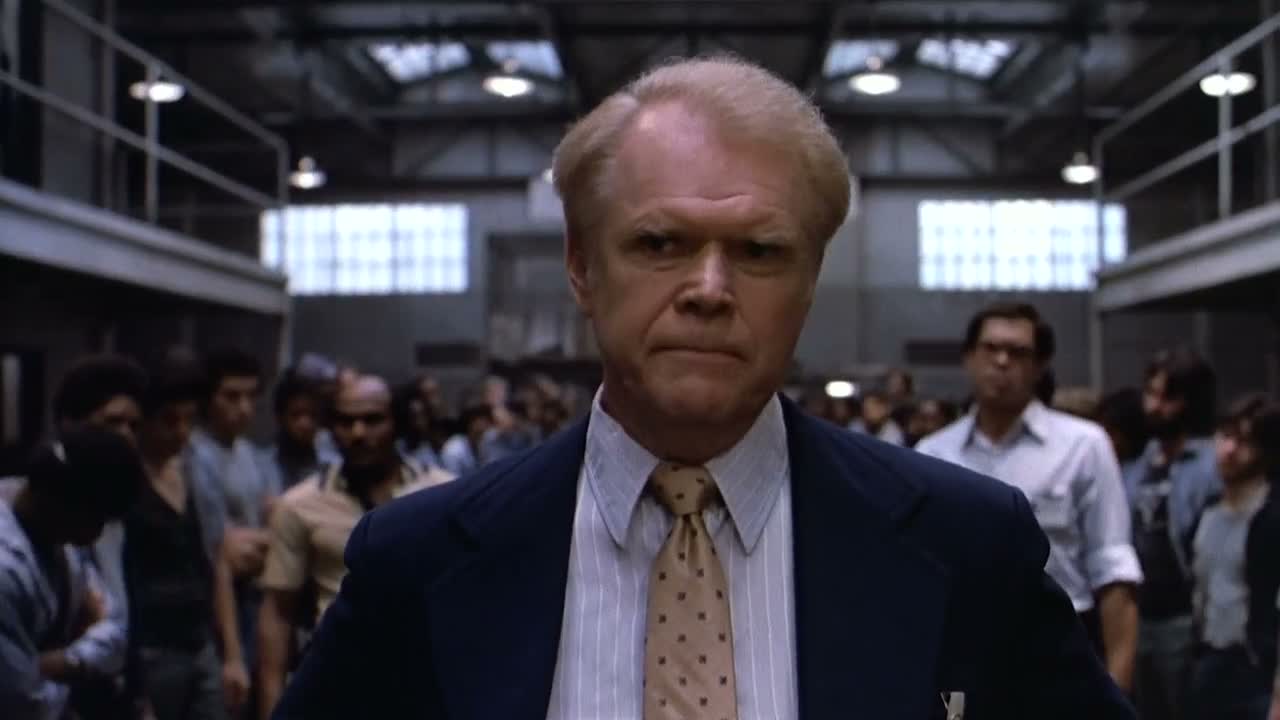
An official reads a young man named Mick his long record and refuses his excuse — "It was an accident." He answers that Mick would have killed someone eventually. Then the tone changes, and someone offers to listen whenever Mick wants to talk.

CourtroomInterrogationsConfrontingExplainingPolice & suspectB2slowamerican

Key moments

Start here, then watch the full scene
  1. ❝ Monólogo · 6 frases The Charges Are Read to Mick

    0:02–1:18
    76s
  2. The Hard Talk Turns Gentle

    1:26–2:00
    34s
  1. ❝ MonólogoEddie's verdict speech6 frasesPracticar ↗

Mick Is Confronted with His Record, explained

What happens

At what looks like an intake or hearing, Mick is confronted with his past: a child's death and a long list of charges, from a stolen vehicle to assault and breaking and entering. Each time he says it was an accident, the official rejects it. Then a gentler voice offers to listen if Mick ever wants to talk.

What's really going on

The scene is built on one word: accident. Mick repeats it as a shield, and the official takes it apart line by line — a child's death, a stolen car, a weapon, breaking and entering — until the excuse collapses under its own weight. "You would've killed somebody sooner or later," he says, which is less a prediction than a verdict. The sarcasm in "You're a real class act" makes the contempt plain, and "don't bullshit yourself" removes any remaining politeness. What follows matters just as much: once the record is done, the tone softens. Someone tells Mick he is there if Mick ever wants to talk, about this "or anything else." The scene sets up its own question — whether a boy this far gone can still be reached — and leaves both answers open.

Key lines & what they mean

“I see you're responsible for the death of an eight-year-old boy.”
The first and heaviest charge, stated flatly to open the confrontation.
“You're a real class act.”
Sarcasm: in this mouth it means the opposite, a verdict on a life of petty crime.
“How you never did any time here before is a miracle.”
He notes the luck, or the failure of the system, that kept Mick out of custody this long.
“And now you're telling me what just happened was an accident?”
The repeated excuse is thrown back at him, no longer as a defense but as an insult.
“You would've killed somebody sooner or later.”
Not a prediction but an assessment: the official treats the outcome as inevitable.
“Well, when you do have an answer, let me know.”
A surprisingly patient line, leaving the door open for Mick to speak when he is ready.
“How do you feel about what went down?”
The first genuinely caring question in the scene, asked after the charges are finished.

Theme

  • Justice — A record is read aloud as judgment; the facts matter more than the boy's repeated claim that it was an accident.
  • Guilt — Mick avoids naming what he did, and the official refuses to let the word accident stand in for responsibility.

Qué aprendes en este capítulo

Puntos de enseñanza

Repasa justo después de ver
Mi nivel2/8

A1–C2 es la escala MCER. Las tarjetas por encima del nivel elegido se atenúan y la reproducción no se pausa en ellas.

Bad Boys: tu progreso

Capítulo 3 de 9 · quedan unos 17 min

← Anterior
Siguiente · 04get to the bottom ofLa escena: Officials Interrogate the Inmates

Ideas clave

Lo que te llevas
  1. Responsible for pins a duty or a cause on someone.
  2. Breaking and entering is a fixed legal phrase.
  3. A real class act is praise flipped into an insult.
  4. Sooner or later means it was always going to happen.

Preguntas frecuentes

La pregunta, luego la frase
Why does Mick keep saying it was an accident?

It is the only defense he has. If the death can be framed as an accident, he is not responsible, so he repeats the phrase even as the official lists charge after charge against him.

Who is reading Mick's record to him?

Someone handling his case at intake or a hearing; the scene never makes the title explicit. He reads the charges, rejects the excuse, and later says he is there to listen.

What does the official mean by 'you would've killed somebody sooner or later'?

He means the outcome was inevitable given Mick's history: even if this particular death was unintended, someone was going to get hurt eventually.

Does the scene end in anger or sympathy?

Both. After hours of hard accusation, the tone turns and someone offers to listen whenever Mick is ready to talk, about this or anything else.