
“Did you do anything at all to help her?”
Por qué es buena
A calm question that makes everyone's silence in that house impossible to hide.
Registro
Neutral
Úsala tú
Did you do anything at all to fix the leak?
Capítulo 12 de 16 · 2'21"
One by one, the neighborhood children answer the prosecutor's questions about what was done to Sylvia, and the details are damning: cigarettes, hoses, a basement. What makes it chilling is the flatness — "I just thought, we were punishing her" — and the silence of the adults who watched.
I Thought We Were Punishing Her
Shirley Says Her Mother Watched
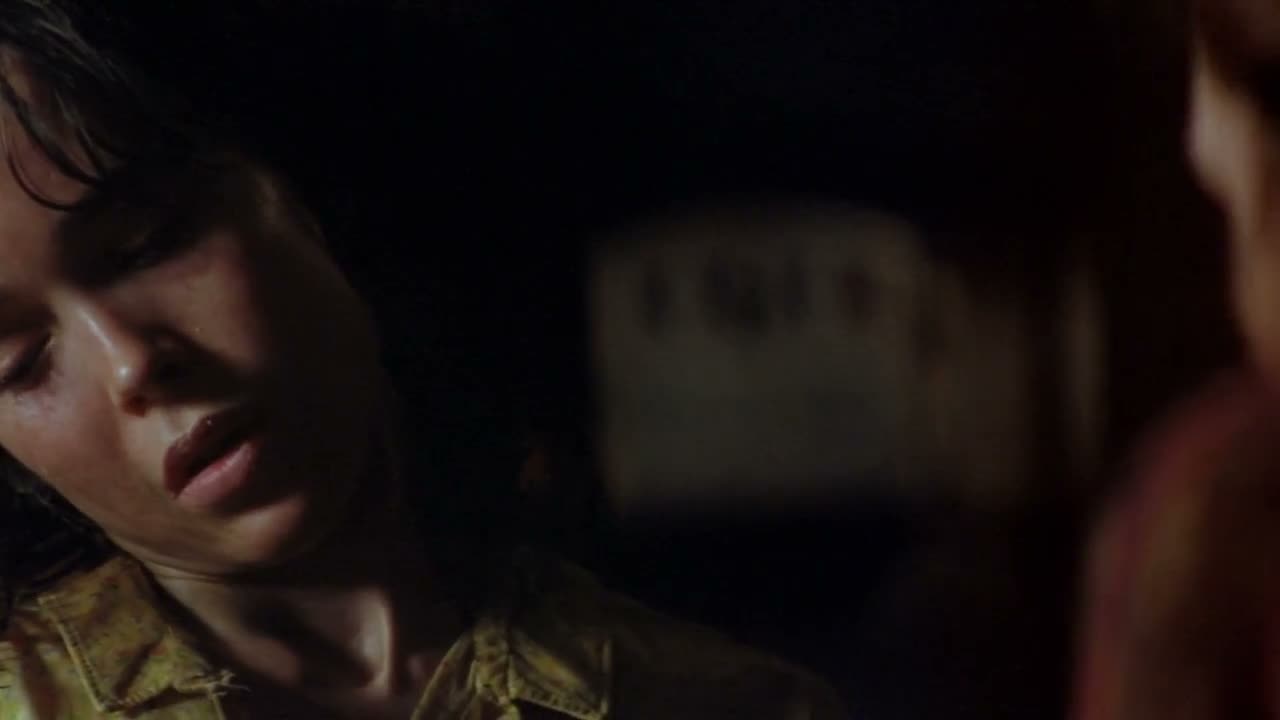
With the jury watching, the prosecutor walks a series of children through the abuse of Sylvia Likens at the Baniszewski house. A witness describes Sally burning Sylvia with cigarettes; Sally admits she told no one except her father, who only warned her not to behave like Sylvia. Shirley confirms her mother stood by while others hurt the girl.
What the testimony exposes is not just violence but the machinery that let it continue. The children treated the abuse as routine: one says Sally would burn Sylvia "every time she came over," and another explains, "I just thought, we were punishing her." When the prosecutor asks whether anyone helped, the answer he is steering toward is silence, and Sally confirms it — she told no one. Shirley's answers are even flatter: her mother was present "just about all the time" and said "Nothing." The scene's power is cumulative. No single line is a confession; together they describe a neighborhood that watched.
A1–C2 es la escala MCER. Las tarjetas por encima del nivel elegido se atenúan y la reproducción no se pausa en ellas.
“Did you do anything at all to help her?”
A calm question that makes everyone's silence in that house impossible to hide.
Neutral
“I just thought, we were punishing her.”
The calmest possible words for a cruel excuse, which is what makes it chilling.
Neutral
“She was there, just about all the time.”
A flat statement that quietly places the mother in the room the whole time.
Neutral
“So, you told no one, what was happening at the Baniszewski's house?”
A courtroom question that indicts the silent bystander.
Formal
 Siguiente · 13know what it's likeLa escena: Gertrude's Basement Confession
Sally says she did report the whipping, but her father's response was to warn her not to behave like Sylvia or she'd get the same. So the one adult she told turned the abuse back into a lesson, which is why nothing changed.
Shirley's testimony says yes — her mother was there 'just about all the time' and said nothing while others hurt Sylvia. That claim matters because it puts Gertrude in the room, not on the edge of events.
Teddy is asked exactly that and answers that no one ordered him, tied her, or washed her down. The closest motive comes from another child: 'I just thought, we were punishing her.' They treated it as group discipline rather than violence.
The hose belonged to a neighbor's child, which ties an ordinary household object to the abuse and shows how many people were involved. It also pins down the witness's own participation instead of letting him describe the scene from a distance.