
“Tommy is just a man possessed.”
Por qué es buena
Five words turn his partner into something driven past ordinary effort.
Registro
Informal
Úsala tú
After the deadline moved up, he was like a man possessed.
Capítulo 6 de 24 · 3'24"
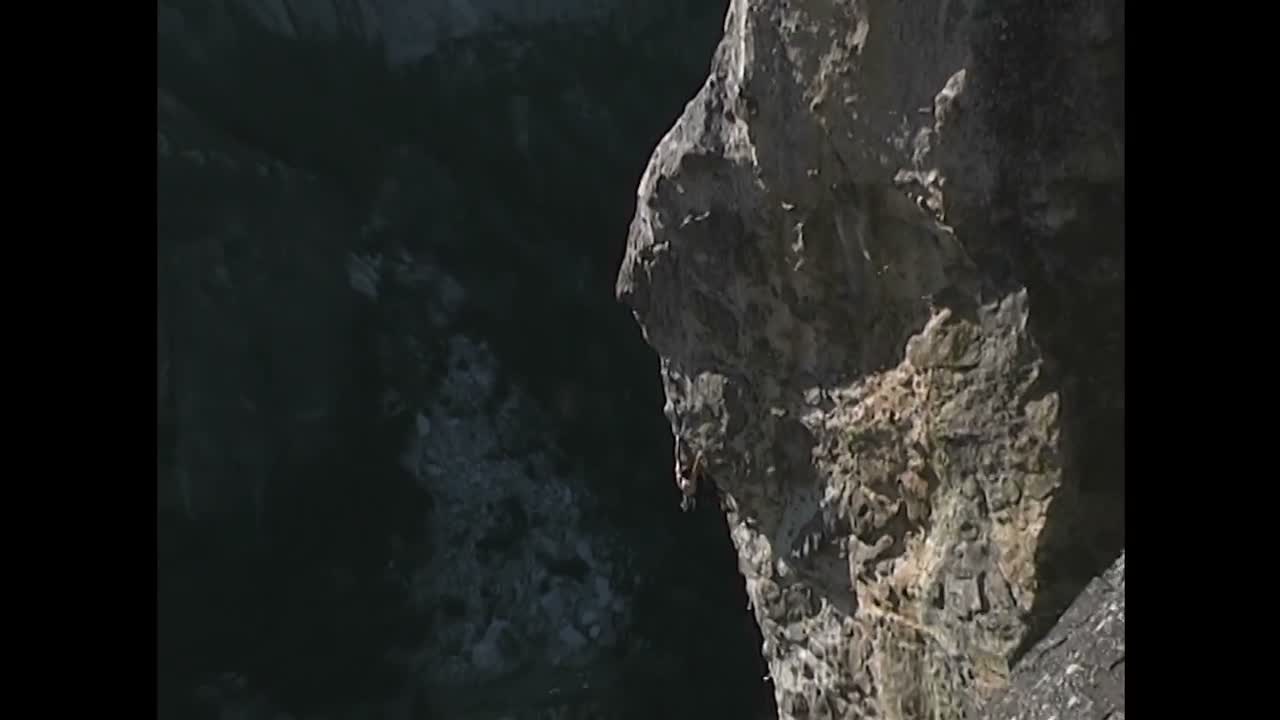
Days on the wall are a grind: climb the same pitch until both men make it, haul hundreds of pounds of gear, sleep in a portaledge, eat when you can. "It's just grabbing razor blades," Tommy says of the rock. The film cuts from that routine to the harder work of healing after Kyrgyzstan, where climbing becomes the way back.
Life on the Wall
❝ Monólogo · 5 frases Tommy Gets Back on the Horse
On the Dawn Wall, Tommy and Kevin spend all day repeating the same pitch until both of them complete it, then haul up their gear, set up portaledges and force down some food. The routine ends only to restart harder the next day. The scene also follows the aftermath of Kyrgyzstan: Beth is traumatized, Tommy cannot sleep, and climbing becomes the way both of them recover.
The wall section is about routine as survival: the same pitch, the same pain, the same tiny meals, repeated until it stops being a challenge and becomes a life. "It's just grabbing razor blades," Tommy says of the holds, and the flatness of the line tells you how normal the suffering has become. Then the film turns to what happened after Kyrgyzstan, and the real subject appears. Beth is traumatized, Tommy cannot sleep, and neither of them knows how to process a night they survived. Their answer is not to talk it through but to return to the thing they know: church, a therapist, and above all climbing. "This has always been my safe place, my way to deal with life," Tommy says, and the wall stops being a stunt and becomes a coping mechanism. The chapter connects the grind and the healing into one idea: he climbs because it is the only language that makes sense of being alive.
A1–C2 es la escala MCER. Las tarjetas por encima del nivel elegido se atenúan y la reproducción no se pausa en ellas.
“Tommy is just a man possessed.”
Five words turn his partner into something driven past ordinary effort.
Informal
“It's just grabbing razor blades.”
One tactile image makes the danger concrete: the rock cuts back.
Informal
“This has always been my safe place, my way to deal with life.”
It reframes a wall of rock as emotional shelter, explaining why he keeps coming back.
Neutral
“I think my way of dealing with it was you just get back on that horse and go climb again.”
A cowboy phrase becomes his survival strategy: fall, remount and keep going.
Informal
“Tommy jumped right back into climbing, and slowly we got back into our groove.”
Fast and slow in one line: instant return, gradual recovery.
Informal
“The next day is going to be more of the same, but harder.”
The flat tone makes endless repetition sound almost routine.
Neutral
I think my way of dealing with it was you just get back on that horse and go climb again. This has always been my safe place, my way to deal with life. I didn't know what to think about Kyrgyzstan. Part of me was feeling kind of empowered. I was like, when the shit really hit the fan, I was able to do what needed to be done to get us out of there.
 Siguiente · 07fire someone upLa escena: Tommy Caldwell Cuts Off His Finger
Once the climbing for the day is done, they still have to haul up hundreds of pounds of gear, set up their portaledges, and force down some food before trying to sleep.
The holds are extremely sharp. Tommy compares the rock to grabbing razor blades, and says he tapes his wounds and reapplies ointment twice a night.
He goes back to climbing. He describes the wall as his safe place and his way of dealing with life, and says his method was simply to get back on the horse and climb again.
Yes. The scene follows her trauma and the couple's recovery, including church and therapy, as she and Tommy try to absorb what happened.