
“I myself would have no idea of being so easily persuaded.”
Por qué es buena
She does not argue the old case; she refuses the very idea of being moved.
Registro
Formal
Úsala tú
I would have no idea of being so easily persuaded to quit.
Capítulo 4 de 7 · 2'22"
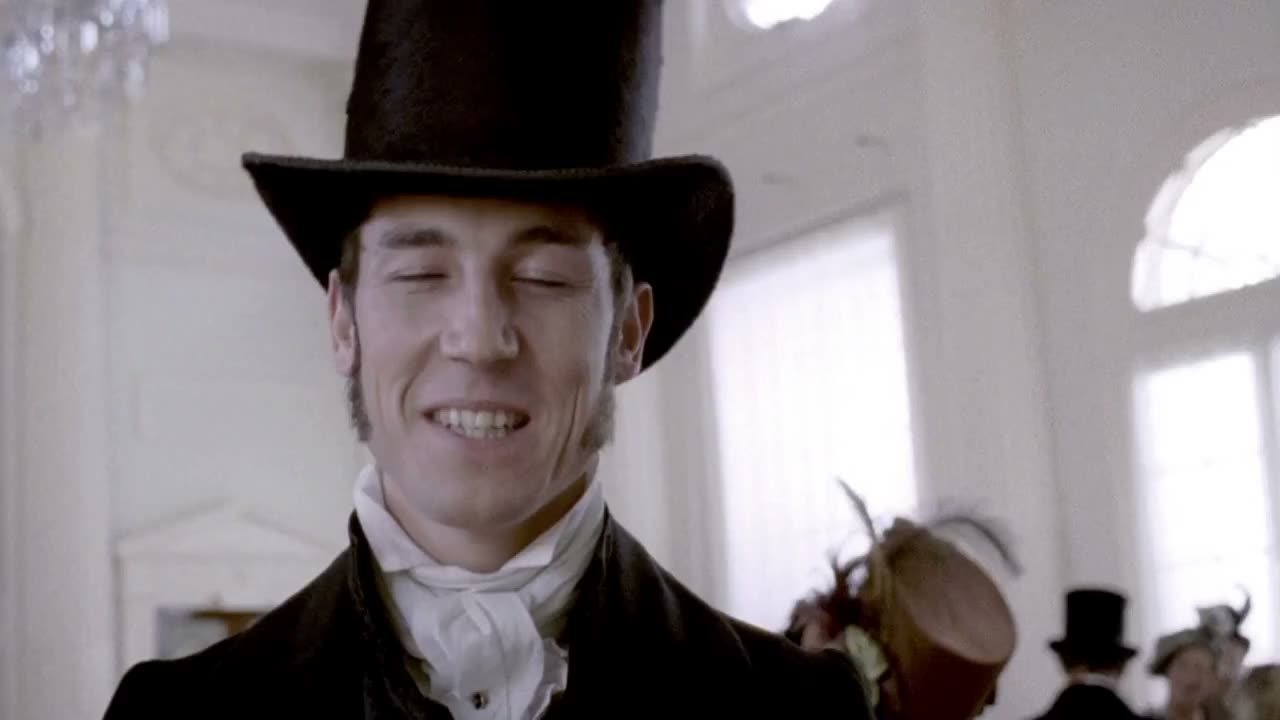
On the walk within sight of Winthrop, one person is too tired to go on, and not calling on the cousins is called very rude. Such connections are then "most unpleasant," capped by "I have never been in that house above twice." A later boast refuses to be "so easily persuaded," and the answer praises "decision and firmness."
Firmness Gets Praised
Within sight of Winthrop, someone is too tired to continue. Staying with Mary is offered. Others may pay respects to the Hayters, and Captain Wentworth's protection is counted on. The connection is called unpleasant. Charles is said to have wanted Anne, and Lady Russell is named in the refusal. Someone boasts of not being easily persuaded and is praised for firmness.
Not calling on the cousins would be "very rude," yet such connections are soon "most unpleasant." The same voice insists "I have never been in that house above twice" and "In my life." Mary is "good-natured enough," but she has "too much of the Elliot pride," and the wish is that Charles had married Anne. The listener answers "No. I did not" when asked if Charles wanted Anne, then hears she "certainly" refused him. The only cause given is "Papa always said it was her great friend Lady Russell's doing": Charles might not be bookish enough, so she persuaded Anne to refuse him. Against that, a voice says "I myself would have no idea of being so easily persuaded" and "When I have made up my mind, I have made it." The reply, "Yours is a character, I see, of decision and firmness," is followed by "I honour it."
A1–C2 es la escala MCER. Las tarjetas por encima del nivel elegido se atenúan y la reproducción no se pausa en ellas.
“I myself would have no idea of being so easily persuaded.”
She does not argue the old case; she refuses the very idea of being moved.
Formal
“Yours is a character, I see, of decision and firmness.”
He names the trait and then says he honours it, which makes the praise a verdict.
Formal
 Siguiente · 05good companyLa escena: Mr Elliot Defines Good Company
It comes right after calling such connections most unpleasant. The speaker is not bragging about a full social life. "Never ... above twice," plus "In my life," caps the visits at two and keeps the house at a distance.
Charles wanted to marry Anne and she refused him, before he married Mary. The only reason offered is hearsay: Papa said it was Lady Russell's doing, because Charles might not be bookish enough to please her, so she persuaded Anne to refuse him.
No. The question "Did you not know he wanted to marry Anne?" gets "No. I did not." A follow-up, "Do you mean to say she refused him?" is answered "Yes, certainly."
The boast just before it: "I myself would have no idea of being so easily persuaded," "When I have made up my mind, I have made it," and "I'm quite determined." The reply honours that, in the line "And I honour it."