
“You've got bigger fish to fry.”
Por qué es buena
A kitchen metaphor lets the other person off the hook without anyone losing face.
Registro
Informal
Úsala tú
Don't worry about missing my birthday; you've got bigger fish to fry.
Capítulo 2 de 16 · 2'10"
On the surface it's a cheerful long-distance call: Jeannie checks in after Warren's retirement dinner and thanks him for the robe. Underneath, Helen is keeping score. "You should've asked for him," she tells Warren, turning a polite phone call into a verdict on whether he's ever bothered to know his future son-in-law.
Warren's Easy Reassurance on the Phone
Warren and Helen have just walked in the door when their daughter Jeannie calls long-distance. Warren takes the phone, tells her the retirement dinner went fine, thanks her for the robe, and waves off her worries. After he hangs up, Helen presses him: did he thank Randall, his future son-in-law, personally?
The call is friendly, but the real conversation is the one Warren can't quite manage. He offers easy reassurance — "don't give it another thought. You've got bigger fish to fry" — and Helen clearly hears him avoiding something. When she asks if he thanked Randall personally, Warren's "I just told Jeannie" is the whole problem in one sentence: he treats his future son-in-law as a formality, a name attached to a gift. Helen pushes harder — "You should've asked for him. You should make an effort" — and he answers with "I know him well enough." It's a small domestic argument, but it maps Warren's larger retreat: a man who can be gracious to strangers on the phone while staying a stranger to the people closest to him.
A1–C2 es la escala MCER. Las tarjetas por encima del nivel elegido se atenúan y la reproducción no se pausa en ellas.
“You've got bigger fish to fry.”
A kitchen metaphor lets the other person off the hook without anyone losing face.
Informal
“I wish you'd try to be more positive.”
Wish plus would dresses a complaint as a wish, which is exactly why it stings.
Neutral
“You know, my father didn't think so much of you at first.”
It turns an old family judgment into a weapon, all inside one offhand sentence.
Informal
“You should've asked for him. You should make an effort.”
Back-to-back shoulds turn a complaint into advice that is really a rebuke.
Informal
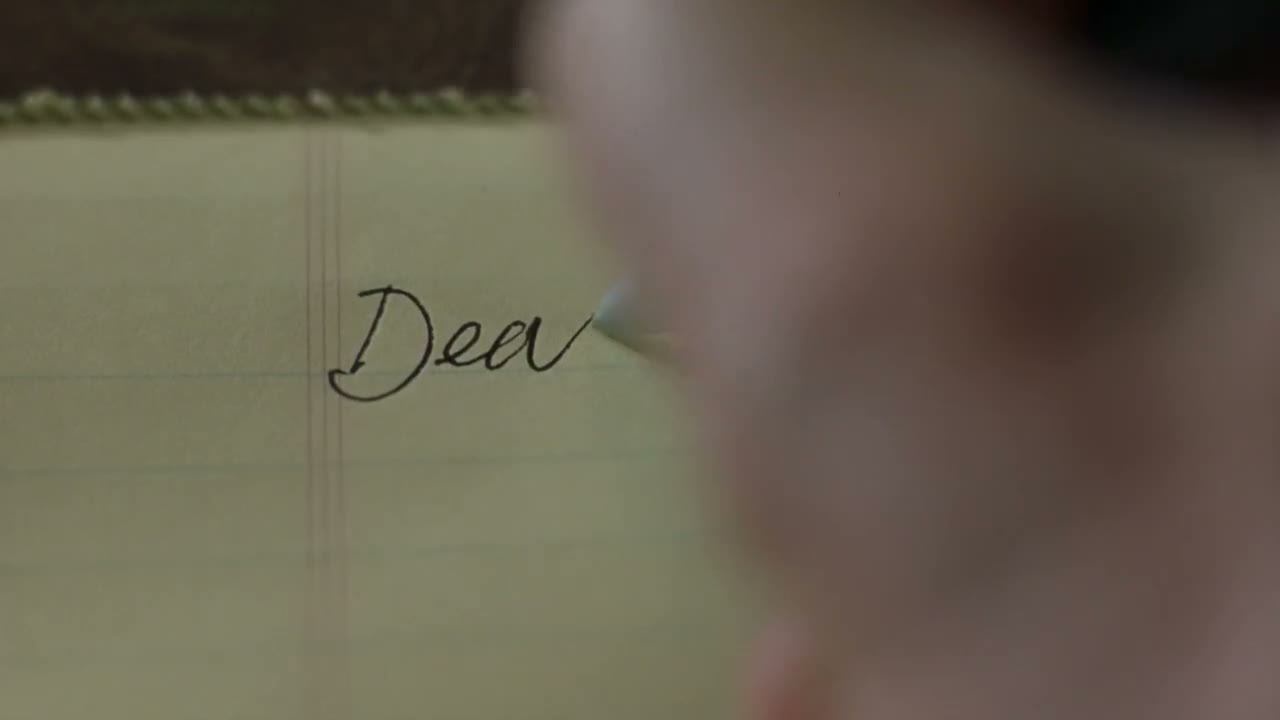 Siguiente · 03work out that wayLa escena: Warren's Video Letter to Ndugu
Because Randall is about to marry their daughter, and Warren still treats him as a stranger. Helen sees the missed thank-you as proof Warren won't make an effort, so she turns a small courtesy into a test of whether he cares.
She has a point — Warren did dodge the chance to thank Randall — but she corners him right after a long call instead of asking what happened. The scene leaves it open whether she's protecting her daughter or just used to scolding him.
The film doesn't say, and Warren clearly doesn't know either — he repeats "he didn't come to the phone" without explanation. Warren treats this as normal; Helen reads it as Warren never asking for him in the first place.
Randall is Jeannie's fiancé, soon to be Warren's son-in-law. He is never heard on the phone, and Warren never asks for him — which is exactly what Helen is upset about.
Her father was skeptical of Warren when they married, and she's saying that doubt faded with time. It's her way of telling Warren to give Randall the same patience he once needed himself.