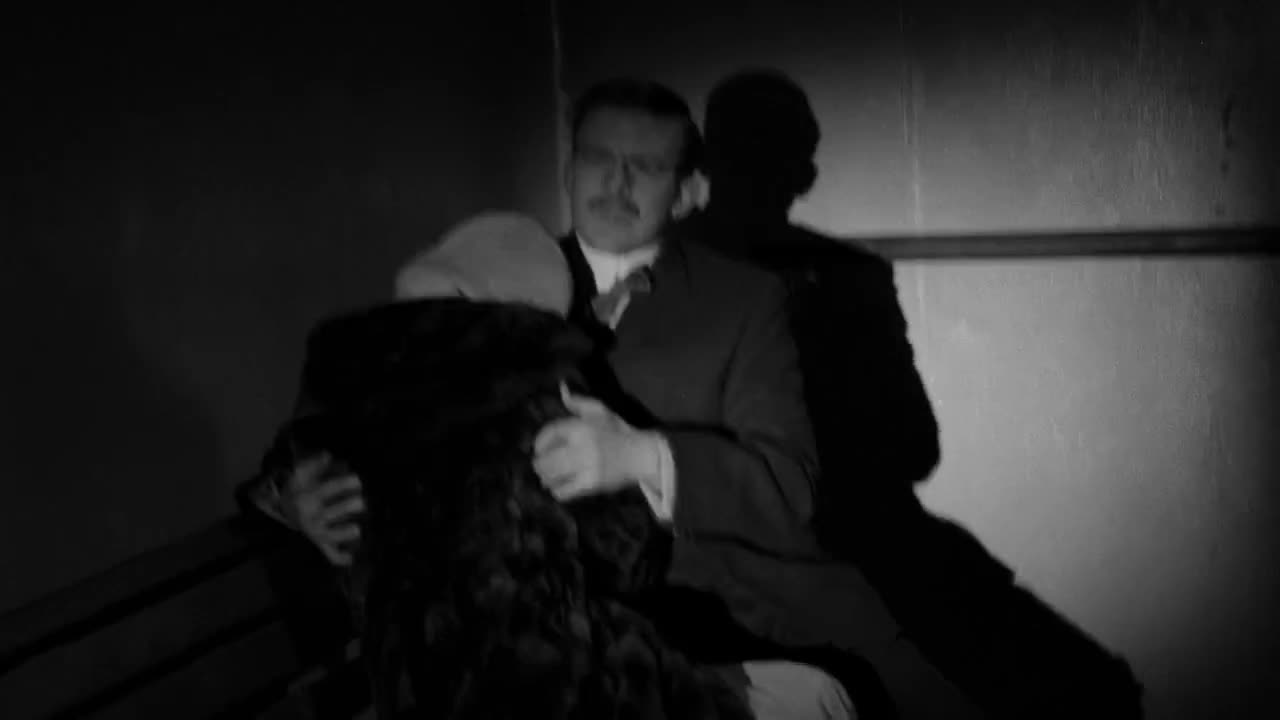
“If there's the slightest bit of haze, we shall have to slow down.”
A tiny condition carries a huge consequence, so the caution sounds calm and absolute.
Formal
Capítulo 4 de 14 · 2'10"
On the bridge, Lightoller takes over the night watch: he checks the temperature, has the lookouts told to keep their eyes skinned for ice, and warns that the slightest haze means slowing down. His line "If there's the slightest bit of haze, we shall have to slow down" states the rule the ship soon breaks.
Keeping Their Eyes Skinned
The Californian Stops for Ice
At night, Lightoller takes over the watch on the Titanic's bridge. He asks about ice reports and the temperature, notes they are nearing the Labrador current, and orders the lookouts roused and told to keep their eyes skinned for small ice and growlers. Soon a lookout reports ice ahead, the engines are stopped, and the ship's position is worked out.
The whole scene is procedure, and that is the point: the officers do everything right on paper. Lightoller asks for ice reports, checks the falling temperature, and gives the order that names the danger — keep their eyes skinned for small ice and growlers. His rule is clear: "If there's the slightest bit of haze, we shall have to slow down." Then, on the Californian nearby, another captain makes the cautious choice, stopping for the night and telling the wireless operator, "You'll have to call her and tell her we're stopped on account of ice." The messages are sent and received, yet nothing changes the Titanic's speed. In a film about a disaster built from small failures, this is the calm before it: men doing their jobs, and the ice already waiting.
A1–C2 es la escala MCER. Las tarjetas por encima del nivel elegido se atenúan y la reproducción no se pausa en ellas.
“If there's the slightest bit of haze, we shall have to slow down.”
A tiny condition carries a huge consequence, so the caution sounds calm and absolute.
Formal
“I'm not trying to find my way around that until daylight.”
It refuses a dangerous move without sounding scared, and until daylight draws a hard line.
Neutral
“You'll have to call her and tell her we're stopped on account of ice.”
A routine radio order that, in hindsight, is the warning nobody acts on.
Formal
“I think that's about the lot.”
A throwaway phrase closes a long list of precautions, and the casualness reads as competence.
Informal
Siguiente · 05drop someone a hintLa escena: Passengers Bet on Titanic's SpeedIt is an old sailing expression meaning to watch very carefully. Lightoller uses it when ordering the lookouts to look out for small ice and growlers.
Because of field ice and the darkness. Her captain says he is not going to find his way around it until daylight, and reports that the ship is stopped on account of ice.
The ship is entering the Labrador current, where small ice and low-lying growlers are likely. He wants the lookouts alerted and the warning passed on when they are relieved.
It does not. The officers keep their speed until a lookout reports ice right ahead, and only then are the engines stopped. That delay is central to the disaster.